 Back
BackViruses and Other Acellular Infectious Agents: Structure, Classification, and Life Cycle
Study Guide - Smart Notes
 Tailored notes based on your materials, expanded with key definitions, examples, and context.
Viruses and Other Acellular Infectious Agents
Divisions and Types of Microbes
Microbes are classified as either cellular or acellular entities. Cellular microbes include fungi, protists, bacteria, and archaea, while acellular infectious agents comprise viruses, viroids, satellites, and prions. Acellular agents lack cellular structure and depend on host cells for replication.

Viruses: Definition and Importance
Viruses are acellular genetic elements that cannot replicate independently of a living host cell. They are not considered alive and are obligate intracellular parasites. Viruses are significant due to their role as major causes of disease, their use in molecular biology as model systems, and their impact on evolution and ecology.
Virology: The study of viruses.
Virion: The complete virus particle, consisting of nucleic acid and a protein coat (capsid).
Envelope: Some viruses possess a lipid membrane derived from the host cell.
Diversity, Size, and Morphology of Viruses
Viruses exhibit remarkable diversity in size, shape, and host range. They infect all forms of life, from bacteria to humans. Viral size ranges from about 20 nm to 300 nm, comparable to the size of a ribosome.
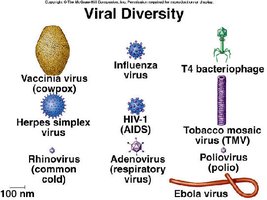
Structure of Viruses
The basic structure of a virus includes a nucleocapsid (nucleic acid + capsid). The capsid is composed of protein subunits called protomers, which assemble into larger units called capsomers. Some viruses have an envelope surrounding the nucleocapsid, acquired from the host cell membrane.
Naked viruses: Consist only of nucleocapsid.
Enveloped viruses: Have an additional lipid membrane.
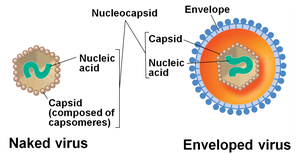
Capsid Symmetry and Types
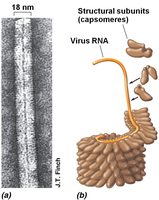
Capsids protect the viral genome and facilitate its transfer between host cells. There are three main types of capsid symmetry:
Helical capsids: Hollow tubes with protein walls; size depends on nucleic acid length.
Icosahedral capsids: Regular polyhedrons with 20 faces and 12 vertices; composed of pentamers and hexamers.
Complex capsids: Do not fit into helical or icosahedral categories (e.g., poxviruses, bacteriophages).
Viral Envelopes and Envelope Proteins
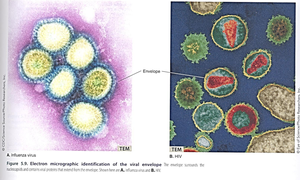
Many animal viruses are enveloped, with the envelope derived from the host cell's plasma or nuclear membrane. Envelope proteins, often appearing as spikes, are viral encoded and play roles in attachment, enzymatic activity, and immune response.
Hemagglutinin (HA): Attachment protein in influenza virus.
Neuraminidase (NA): Enzymatic protein in influenza virus.
Virion Enzymes
Some viruses carry enzymes essential for their replication, such as:
Reverse transcriptase: RNA-dependent DNA polymerase in retroviruses.
Lysozyme: Facilitates entry or release by breaking down cell walls.
Classification of Viruses
Viruses are classified based on:
Host: Animal, plant, or bacteria.
Morphology: Size, capsid symmetry, presence or absence of envelope.
Nucleic acid: DNA (ss or ds) or RNA (ss or ds).
The Baltimore Classification Scheme categorizes viruses by their genome type and how they produce mRNA:
Class | Genome Type | Examples |
|---|---|---|
I | dsDNA | Adenoviruses, Herpesviruses, Poxviruses |
II | ssDNA | Parvoviruses |
III | dsRNA | Reoviruses |
IV | (+)ssRNA | Picornaviruses, Togaviruses |
V | (−)ssRNA | Orthomyxoviruses, Rhabdoviruses |
VI | ssRNA-RT | Retroviruses |
VII | dsDNA-RT | Hepadnaviruses |
+ strand: Same sequence as mRNA (coding strand). − strand: Complementary to mRNA (template strand).
Steps of Viral Infection and Multiplication
Viral replication follows a series of steps:
Attachment (Adsorption): Virus binds to specific host cell receptors.
Entry and Uncoating: Viral genome or nucleocapsid enters the cell via fusion, endocytosis, or injection.
Synthesis: Viral proteins and nucleic acids are produced; early proteins for replication, late proteins for structure.
Assembly: New virions are assembled, often in stages.
Release: Non-enveloped viruses lyse the cell; enveloped viruses bud from the membrane.
Virus replication is characterized by a one-step growth curve, with a latent period (eclipse + maturation) followed by a burst of virion release.
Bacteriophage Life Cycles: Lytic and Lysogenic
Bacteriophages can follow two main life cycles:
Lytic cycle: Phage replicates and lyses the host cell.
Lysogenic cycle: Phage genome integrates into host DNA (prophage), replicates with host, and can later enter lytic cycle.
Regulation of these cycles involves proteins such as cI (lambda repressor) for lysogeny and Cro repressor for lytic events. Cell stress can trigger the switch from lysogenic to lytic.
Cultivation and Quantification of Viruses
Viruses are cultivated using appropriate hosts:
Bacterial/Archaeal viruses: Broth or agar cultures; plaques indicate viral replication.
Animal viruses: Animals, embryonated eggs, or tissue cultures; cytopathic effects and plaques are observed.
Plant viruses: Plant tissue cultures, protoplasts, or whole plants.
Quantification methods include direct counting, plaque assays, hemagglutination, and qPCR. Plaque assays measure infectivity by counting clear zones (plaques) formed by virus-induced cell lysis.
Viruses in the Environment (Ecology)
Viruses play crucial roles in controlling microbial populations, facilitating gene transfer, and contributing to organic matter cycling. They act as biocontrol agents and are important in aquatic ecosystems.
Other Acellular Infectious Agents
Viroids: Infectious RNA molecules lacking a protein coat; cause plant diseases; smallest known pathogen genomes; rely on host enzymes.
Prions: Proteinaceous infectious particles causing neurodegenerative diseases; transmitted by ingestion; no effective treatment; result in brain degeneration.
Satellites: Encode their own capsid proteins but require a helper virus for replication (e.g., hepatitis D virus requires hepatitis B virus).
Defense Against Viral Infection
Hosts defend against viruses using various mechanisms:
Eukaryotes: Immune system.
Prokaryotes: Restriction modification systems (degrade non-self DNA), CRISPR systems (target viral nucleic acids).
Viruses may modify their genomes to evade host defenses, leading to an evolutionary arms race between viruses and their hosts.
Summary
Viruses are diverse, acellular infectious agents classified by host, morphology, and nucleic acid type.
They follow distinct life cycles and replication strategies, impacting health, ecology, and evolution.
Other acellular agents include viroids, prions, and satellites, each with unique properties and pathogenic mechanisms.
