 Back
BackAnimal Tissues definitions

 03:16
03:16
Terms in this set (12)
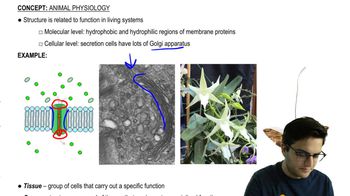
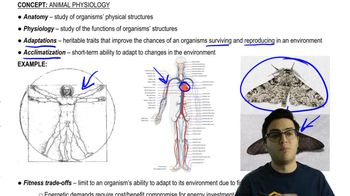
Anatomy
The study of an organism's physical structures, focusing on the form and arrangement of various body parts and their relationships to each other.
Physiology
The study of how biological structures function, focusing on processes like blood circulation, respiration, and neural activity, and how these functions support life and adaptation.
Cardiovascular System
A network of veins, arteries, capillaries, and the heart that pumps blood to deliver oxygen and nutrients to tissues and remove waste products from the body.
Fitness Trade Offs
The concept refers to the compromise between different traits in an organism due to limited resources, where enhancing one trait may reduce the efficiency or effectiveness of another.
Alleles
Variants of a gene that arise by mutation and are found at the same place on a chromosome, influencing specific traits.
Gastrulation
The process in embryonic development where a single-layered blastula reorganizes into a multi-layered structure, forming the three primary germ layers: ectoderm, mesoderm, and endoderm.
Germ Layers
Primary cell layers in an embryo that differentiate into all tissues and organs: ectoderm (outer), mesoderm (middle), and endoderm (inner).
Extracellular Matrix
A network of proteins and gel-like substances outside cells providing structural support, separating tissues, and facilitating cell communication, akin to a surrogate cell wall in animals.
Neurons or Nerve Cells
Specialized cells that transmit electrical and chemical signals, featuring axons for signal transmission and dendrites for signal reception, essential for nervous system function.
Glia
Support cells in the nervous system essential for neuron survival and function, involved in signaling and maintaining homeostasis.
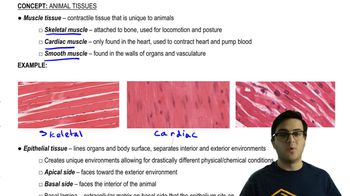
Skeletal Muscle
A type of muscle tissue attached to bones, enabling voluntary movements and maintaining posture through contraction.
Epithelial Tissue
A tissue that lines organs and body surfaces, creating barriers to separate internal and external environments, allowing for distinct chemical and physical conditions.