 Back
BackGenetic Variation During Meiosis definitions


 07:08
07:08
Terms in this set (13)
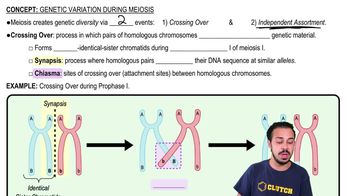
Non Sister Chromatids
Chromatids from homologous chromosomes that are not genetically identical and can exchange genetic material during crossing over.
Homologous Chromosomes
Pairs of chromosomes, one from each parent, that have the same genes at the same loci but may have different alleles.
Alleles
Different versions of a gene found at the same locus on homologous chromosomes, contributing to genetic variation.
Genes
Segments of DNA that code for specific proteins or functional RNA, determining inherited traits by directing the synthesis of molecules essential for cellular structure and function.
Synaptonemal Complex
A protein structure that forms between homologous chromosomes during meiosis, facilitating the exchange of genetic material by holding the chromosomes together.
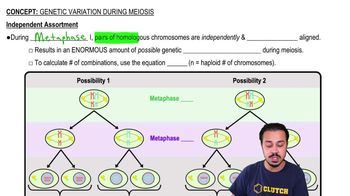
Metaphase Plate
The central plane where homologous chromosomes align during metaphase I of meiosis, ensuring random assortment and genetic diversity in gametes.
Anaphase I
The stage in meiosis where homologous chromosomes are pulled to opposite poles, ensuring each daughter cell receives a random mix of maternal and paternal chromosomes.
Gametes
Haploid cells produced by meiosis, carrying half the genetic information of a parent, essential for sexual reproduction by fusing to form a zygote.
Fertilization
The fusion of haploid gametes (sperm and egg) to form a diploid zygote, initiating the development of a new organism.
Sister Chromatids
Identical copies of a chromosome connected by a centromere, formed during DNA replication and separated during cell division.
Daughter Cells
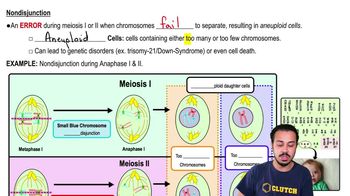
Cells resulting from the division of a single parent cell, each containing an identical set of chromosomes.
Genetic Diversity
Variation in the genetic makeup of a population due to processes like crossing over, independent assortment, and random fertilization, leading to unique combinations of alleles in offspring.
Meiosis I
The first division in meiosis where homologous chromosomes pair, exchange genetic material, and segregate into two daughter cells, ensuring genetic diversity.