 Back
BackIntroduction to Photosynthesis definitions

 03:32
03:32
Terms in this set (8)
Photosynthesis
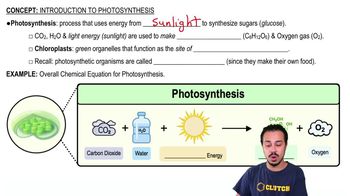
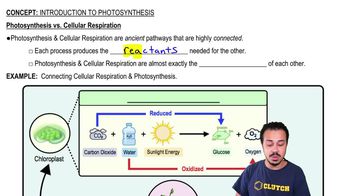
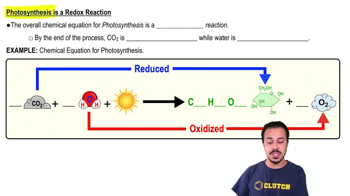
Process where plants convert carbon dioxide and water into glucose and oxygen using sunlight energy, with glucose being the primary product and oxygen as a byproduct.
Carbon Dioxide
A colorless gas absorbed by plants during photosynthesis to produce glucose and oxygen and released by animals during respiration.
Water
A polar molecule essential for life, acting as a solvent, reactant in photosynthesis, and medium for biochemical reactions.
Sunlight
Electromagnetic radiation from the sun provides the energy necessary for photosynthesis, enabling plants to convert carbon dioxide and water into glucose and oxygen.
Oxygen
A diatomic gas produced as a byproduct of photosynthesis, essential for aerobic respiration in most living organisms.
Chlorophyll
A pigment that absorbs light energy, primarily in the blue and red wavelengths, and plays a crucial role in converting solar energy into chemical energy during photosynthesis.
Pigment
A molecule that absorbs specific wavelengths of light, facilitating processes like photosynthesis by capturing solar energy.
Sun
The primary energy source for photosynthesis, converting light energy into chemical energy stored in glucose, and indirectly powering cellular respiration.