 Back
BackLand Plants definitions

 06:17
06:17
Terms in this set (13)
Land Plants
Terrestrial plants evolved from green algae, adapting to land with features like cuticles, seeds, and vascular tissues. They include nonvascular, seedless vascular, and seed plants.
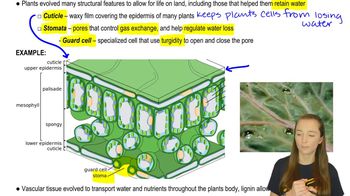
Cuticle
A waxy, protective layer covering the epidermis of plants, crucial for preventing water loss and protecting against pathogens in terrestrial environments.
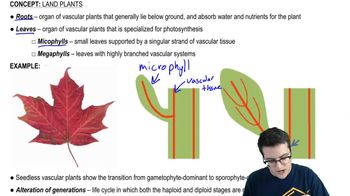
Vascular Tissue
Specialized plant tissue that transports water, minerals, and nutrients, enabling plants to grow larger and thrive on land.
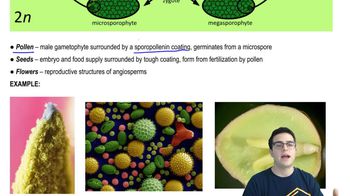
Pollen
A male gametophyte encased in a tough coating, enabling sperm to travel through air and fertilize eggs without needing water.
Embryophytes
Organisms that evolved from green algae to live on land, retaining embryos within parental tissues, and include nonvascular, seedless vascular, and seed plants.
Nonvascular Plants
Plants that lack specialized vascular tissues (xylem and phloem) for water and nutrient transport, resulting in small size and reliance on moist environments for reproduction.
Trachids
Specialized plant cells with thick lignin-reinforced walls, crucial for water transport and structural support, enabling plants to grow taller and larger.
Lignin
A complex organic polymer in plant cell walls that provides rigidity and structural support, enabling plants to grow taller and withstand various environmental stresses.
Bryophytes
Nonvascular land plants, including mosses, liverworts, and hornworts, that lack lignin and tracheids, are gametophyte-dominant, and rely on moist environments for reproduction.
Gametophyte
The haploid stage in a plant's life cycle that produces gametes (sperm and eggs) through mitosis, dominant in nonvascular plants like mosses.
Sporophyte
The diploid, multicellular stage in a plant's life cycle that produces spores through meiosis, leading to the formation of gametophytes.
Xylem
A vascular tissue in plants that transports water and minerals from roots to other parts, providing structural support through lignin-reinforced cells.
Phloem
Specialized vascular tissue in plants that transports sugars, amino acids, and nutrients from photosynthetic areas to other parts of the plant.