How is O2 produced during the light reactions of photosynthesis?
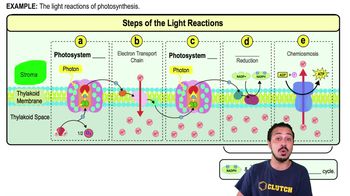
O2 is produced when water molecules are split in photosystem II, releasing oxygen gas as a byproduct.
When is oxygen produced during photosynthesis?
Oxygen is produced during the light reactions, specifically when water is split in photosystem II.
Why is water essential for the process of photosynthesis?
Water is essential because it provides electrons for the light reactions and its splitting releases oxygen gas.
Where within the chloroplast do the light reactions of photosynthesis take place?
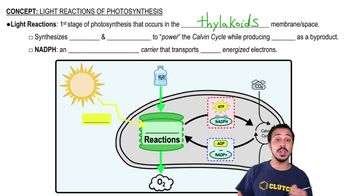
The light reactions occur in the thylakoid membranes and thylakoid space of the chloroplast. These are the green, pancake-like structures inside the chloroplast.
What is the primary function of NADPH produced during the light reactions?
NADPH acts as an electron carrier, transporting two energized electrons. It is used in the Calvin cycle to help convert carbon dioxide into glucose.
How does the electron transport chain contribute to ATP synthesis during the light reactions?
The electron transport chain uses the energy from electrons to pump hydrogen ions into the thylakoid space, creating a proton gradient. This gradient drives ATP synthesis through chemiosmosis.
What role does ATP synthase play in the light reactions of photosynthesis?
ATP synthase is a protein embedded in the thylakoid membrane that allows hydrogen ions to flow down their concentration gradient. This flow provides the energy needed to convert ADP into ATP.
Why does photosystem II come before photosystem I in the sequence of the light reactions?
Photosystem II comes first because it was discovered after photosystem I, but it actually initiates the process by absorbing light and energizing electrons from water. The electrons then move to photosystem I for further energization.
What happens to the oxygen gas produced during the light reactions?
The oxygen gas can be used by the plant for aerobic cellular respiration or released into the atmosphere through the stomata. It is a byproduct of water splitting in photosystem II.
How are the products of the light reactions connected to the Calvin cycle?
ATP and NADPH produced in the light reactions provide the chemical energy and electrons needed for the Calvin cycle. The Calvin cycle uses these molecules to convert carbon dioxide into organic sugars.
 Back
Back
 01:48
01:48