Disease-causing agents, such as bacteria, viruses, and fungi, that invade and harm host organisms.
Cuticle
A waxy, protective layer on the surface of plant epidermis cells that minimizes water loss and acts as a barrier against pathogens like bacteria, fungi, and viruses.
Epidermis
The outermost layer of cells in plants, providing a protective barrier against water loss, pathogens, and physical damage.
Trichomes
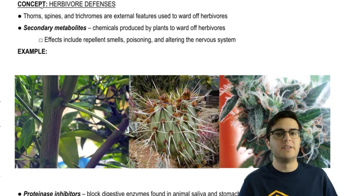
Hair-like structures on plant surfaces that deter herbivores by being pointy or releasing chemicals, such as histamines, which can act as toxins.
Herbivores
Animals that primarily consume plant material, such as leaves, stems, and roots, often developing specialized digestive systems to efficiently process fibrous plant matter.
Inducible Defenses
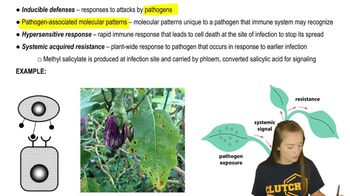
Defenses activated in plants upon pathogen detection, involving recognition of pathogen-associated molecular patterns (PAMPs) and leading to localized cell death to prevent pathogen spread.
Hypersensitive Response
A rapid plant immune response causing localized cell death to prevent pathogen spread by sacrificing infected cells.
Systemic Acquired Resistance
A plant-wide immune response activated by a prior localized infection, enhancing resistance to future pathogen attacks through signaling molecules like salicylic acid.
Salicylic Acid
A plant hormone that signals systemic acquired resistance, triggering defense mechanisms against pathogens by inducing the production of antimicrobial proteins and thickening cell walls.
Secondary Metabolites
Chemical compounds produced by plants that are not directly involved in growth, development, or reproduction but serve to deter herbivores, pathogens, or attract pollinators.
Protease Inhibitors
Compounds that block digestive enzymes in herbivores, preventing them from digesting plant material and causing illness, thus deterring further consumption.
Systemin
A plant hormone that signals the production of protease inhibitors in response to herbivore damage, deterring further feeding by making the plant less digestible.
Parasitoids
Organisms that live freely as adults but are parasitic as larvae, often killing their host, such as wasps that lay eggs inside caterpillars.
 Back
Back
 05:37
05:37