 Back
BackReview of Photosynthesis definitions


 08:50
08:50
Terms in this set (10)
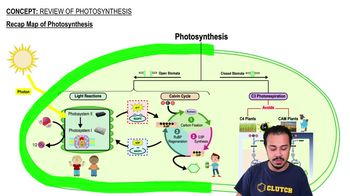
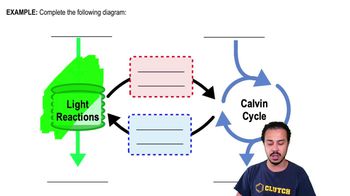
Light Reactions
The process in photosynthesis where light energy is converted into chemical energy, producing ATP and NADPH through chemiosmosis and electron transport.
Glucose
A simple sugar and primary energy source for cells, broken down during cellular respiration to produce ATP.
Chemiosmosis
The process where ATP is generated using the energy from a proton gradient across a membrane, driven by the movement of protons through ATP synthase.
Substrate Level Phosphorylation
ATP production by direct transfer of a phosphate group to ADP from a phosphorylated intermediate, occurring in glycolysis and the Krebs cycle.
Electron Transport Chain
A series of protein complexes in the inner mitochondrial membrane that transfer electrons from NADH and FADH₂ to oxygen, creating a proton gradient that drives ATP synthesis.
Hydrogen Ion Gradient
A difference in proton concentration across a membrane, driving ATP synthesis via chemiosmosis in cellular respiration and photosynthesis.
ATP Synthase
An enzyme that synthesizes ATP from ADP and inorganic phosphate using a proton gradient across a membrane during cellular respiration and photosynthesis.
NADPH
A reduced electron carrier produced in the light reactions of photosynthesis, essential for transferring electrons and providing reducing power for biosynthetic reactions.
Photosystem
A complex of proteins and pigments in chloroplasts that absorbs light energy to drive the light reactions of photosynthesis, producing ATP and NADPH.
Oxygen Gas
A diatomic molecule essential for aerobic respiration, acting as the final electron acceptor in the electron transport chain, resulting in the formation of water.