 Back
BackSeed Plants definitions

 06:26
06:26
Terms in this set (11)
Gymnosperms
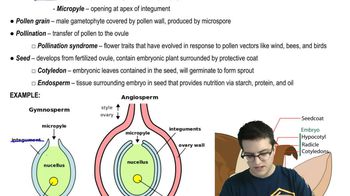
Seed-producing plants with exposed seeds, typically in cones, not enclosed by an ovary. They include conifers like pine trees, which have needle-like leaves adapted to prevent water loss.
Ovary
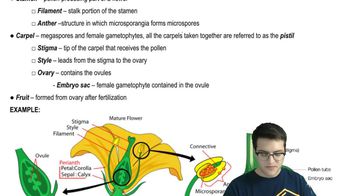
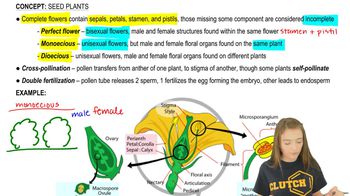
The structure in flowering plants that houses ovules, which develop into seeds after fertilization, and matures into fruit.
Sporangia
Structures in plants where spores are produced, often found in cones or other specialized organs, facilitating the reproductive cycle by generating male or female gametophytes.
Conifers
Gymnosperms with needle-like leaves and cones (strobili) for reproduction, adapted to prevent water loss in dry or cold environments.
Strobili
Cones in gymnosperms, composed of modified leaves called sporophylls, which house sporangia for reproduction.
Sporophyll
A modified leaf that bears sporangia, often forming part of a cone in gymnosperms, facilitating the production and dispersal of spores.
Megasporangium
A structure within the ovule where meiosis occurs to produce haploid megaspores, one of which develops into a female gametophyte containing eggs.
Angiosperms
Flowering plants that produce seeds enclosed within a fruit, characterized by diverse forms and reproductive structures like flowers, monocots (1 cotyledon), and eudicots (2 cotyledons).
Cotyledon
The first leaf or pair of leaves produced by the embryo of a seed plant, crucial for nutrient absorption during early growth.
Sepal
Green, leaf-like structures that encase and protect a flower bud before it opens, and later support the petals when in bloom.
Carpal
A structure in the wrist composed of eight small bones arranged in two rows, facilitating wrist movement and flexibility.