 Back
BackViruses definitions

 05:
05:
Terms in this set (42)
Viruses
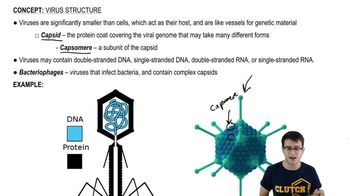
Microscopic entities that lack cellular structure, consisting of genetic material (DNA or RNA) encased in a protein coat (capsid), and require a host cell to replicate and propagate.
Capsid
A protein shell that encases a virus's genetic material, composed of subunits called capsomeres, providing protection and aiding in the delivery of the viral genome into host cells.
Capsomeres
Protein subunits that assemble to form the protective outer shell (capsid) of a virus, encapsulating its genetic material.
Double Stranded DNA
A molecule consisting of two complementary strands of nucleotides wound around each other in a double helix, forming the genetic blueprint for most organisms.
Single Stranded DNA
A DNA molecule consisting of a single strand, often found in certain viruses, which lacks the complementary strand typical of double-stranded DNA.
Double Stranded RNA
A type of RNA molecule with two complementary strands, often found in certain viruses, that can serve as a template for viral protein synthesis and replication within host cells.
Single Stranded RNA
A molecule of RNA consisting of a single strand, often serving as the genetic material for certain viruses, capable of direct translation or requiring complementary strand synthesis for protein production.
Bacteriophage
A virus that infects bacteria, using a complex capsid to inject its genetic material into the host, leading to either lytic or lysogenic replication cycles.
Phages
Viruses that specifically infect bacteria, using them to replicate by injecting their genetic material, often leading to the destruction of the host cell.
Viral Envelope
A membranous structure derived from the host cell's membrane, aiding in viral entry and evasion of the host immune system.
Glycoproteins
Surface proteins on viruses that bind to host cell receptors, determining the virus's host range and facilitating entry into the host cell.
Host Range
The collection of host species that a virus can infect, determined by the virus's surface proteins and their ability to recognize and bind to specific receptors on the host cells.
Spontaneous Assembly
The process by which viral components self-organize into a functional virus without external guidance, similar to how cell membranes form spontaneously in an aqueous environment.
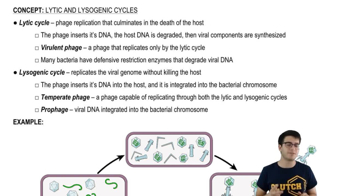
Lytic Cycle
A viral replication process where the virus hijacks the host cell's machinery to produce new viruses, leading to the host cell's lysis and release of progeny viruses.
Lysogenic Cycle
A viral replication process where the viral genome integrates into the host's DNA, remaining dormant and replicating with the host cell's genome, potentially switching to a lytic cycle later.
Virulent Phage
A bacteriophage that exclusively replicates through the lytic cycle, leading to the destruction of the host cell by causing it to burst and release new viral particles.
Restriction Enzymes
Enzymes that cut DNA at specific sequences, protecting bacteria by degrading foreign DNA, such as that from viruses.
Prophage
A viral genome integrated into a bacterial chromosome, remaining dormant until triggered to enter the lytic cycle.
Retroviruses
Viruses with RNA genomes that reverse transcribe their RNA into DNA, integrating it into the host's genome using the enzyme reverse transcriptase, leading to persistent infections.
Reverse Transcription
The process by which RNA is converted into DNA, often used by retroviruses to integrate their genetic material into the host cell's genome.
Reverse Transcriptase
An enzyme that converts viral RNA into DNA, allowing integration into the host genome, crucial for retrovirus replication.
Provirus
A viral DNA integrated into the host cell's genome, allowing the virus to replicate with the host's cellular machinery.
HIV
A retrovirus that targets the immune system, using reverse transcriptase to integrate its RNA genome into the host's DNA, leading to immune deficiency.
RNA Polymerase
An enzyme that synthesizes RNA from a DNA template during transcription, crucial for gene expression and viral replication.
Positive Sense Strand
A single-stranded RNA virus genome that can directly serve as mRNA for protein synthesis, allowing immediate translation upon entering the host cell.
Negative Sense Strand
A viral RNA strand that is complementary to the mRNA needed for protein synthesis, requiring RNA polymerase to first transcribe it into a positive-sense mRNA before translation.
Transcription
The process where RNA polymerase reads DNA to synthesize a complementary RNA strand, essential for gene expression and protein production.
mRNA
A molecule that carries genetic information from DNA to ribosomes, where it serves as a template for protein synthesis.
Coding Strand
The DNA strand with the same sequence as the mRNA, except thymine (T) is replaced by uracil (U) in RNA, used as a template during transcription.
Plus Strand
A single-stranded RNA virus genome that can directly serve as mRNA for protein synthesis, facilitating immediate translation upon infection.
Viral RNA Polymerase
An enzyme used by RNA viruses to replicate their RNA genome within a host cell, enabling the production of viral mRNA and proteins necessary for viral replication.
Smallpox
A highly contagious and deadly viral disease caused by the variola virus, characterized by fever, malaise, and a distinctive progressive skin rash.
Herpes
A DNA virus causing lifelong infections, characterized by latent and active phases, often resulting in sores or blisters on the skin or mucous membranes.
Chickenpox
A highly contagious viral infection causing an itchy rash and red spots or blisters, primarily affecting children, and is preventable by vaccination.
West Nile Virus
A mosquito-borne virus causing flu-like symptoms, encephalitis, or meningitis in severe cases, primarily affecting birds, humans, and other mammals.
Common Cold
A viral respiratory infection caused by rhinoviruses, leading to symptoms like a runny nose, sore throat, and cough. It spreads through airborne droplets and direct contact with infected surfaces.
Hepatitis C
A liver disease caused by a single-stranded RNA virus, often leading to chronic infection, liver inflammation, and potentially severe liver damage. It spreads primarily through blood-to-blood contact.
Rabies
A viral disease transmitted through animal bites, causing severe neurological symptoms and often fatal if untreated.
Ebola
A highly infectious RNA virus causing severe hemorrhagic fever, characterized by high mortality rates and transmitted through direct contact with bodily fluids of infected individuals.
Influenza
A highly contagious viral infection affecting the respiratory system, characterized by fever, cough, and body aches, caused by RNA viruses of the Orthomyxoviridae family.
Polio
A viral disease caused by an RNA virus that can lead to paralysis by infecting the nervous system, primarily affecting children and spread through contaminated water or food.
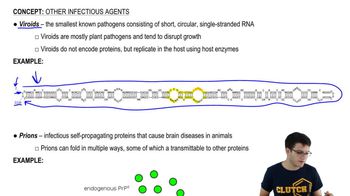
Viroids
Smallest known pathogens, consisting of short, circular, single-stranded RNA, infecting plants and disrupting their growth without encoding proteins, relying on host enzymes for replication.