 Back
Back1.1
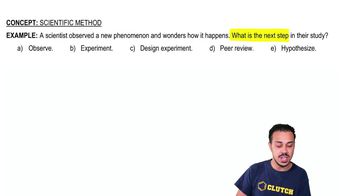
 01:35
01:35
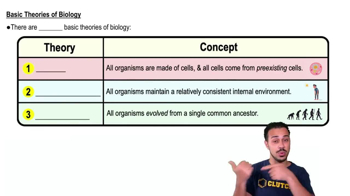
Terms in this set (28)
Biology is the scientific study of life.
Science is based on inquiry, focusing on natural causes and phenomena that can be observed and measured.
Exploration: making observations and collecting data about the subject of study.
A proposed explanation for a set of observations that is testable and falsifiable.
To evaluate hypotheses by making predictions and conducting experiments or further observations.
An experiment comparing groups that differ in only one variable to determine its effect.
The control group lacks the factor being tested; the experimental group receives it.
The independent variable is manipulated; the dependent variable is measured as the outcome.
A quality control process where experts evaluate scientific work before publication to ensure validity.
It provides impartial evaluation, improving the reliability and credibility of scientific papers.
Science uses testable claims, repeatable results, and peer review; pseudoscience lacks these and relies on anecdotal evidence.
A broad, well-substantiated explanation supported by a large body of evidence that can generate testable hypotheses.
A hypothesis is a testable explanation for specific observations; a theory explains many observations and is well supported.
Information considered objectively true based on current evidence and verifiable observations.
An experiment where some information is withheld from participants or researchers to reduce bias.
Neither participants nor researchers know who is in the control or experimental group, preventing bias.
Improvement in patients receiving a fake treatment due to their belief they are being treated.
They attached satellite trackers to turtles and floating buckets (control) and compared their movements.
The type of object tracked: baby turtles (experimental) versus floating buckets (control).
The speed and path of movement measured by satellite trackers.
Baby sea turtles swim actively rather than just drifting with currents.
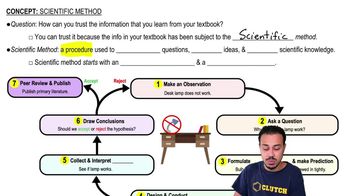
Investigations often involve repeated cycles of observation, hypothesis, testing, and communication, not a fixed order.
Scientists share data, obtain feedback, publish results, replicate findings, and build consensus.
Building knowledge, solving problems, developing technologies, and benefiting society.
It is up to date, peer-reviewed, authored by experts, free of bias, and based on multiple lines of evidence.
A field falsely presented as scientific, often lacking testable claims, repeatability, and peer review.
A general guideline involving exploration, hypothesis formation, testing, data collection, and conclusion drawing.
They propose explanations, make predictions, test them, and revise hypotheses based on results.