 Back
BackCirculatory and Respiratory Systems - General Biology
 02:15
02:15
Terms in this set (22)
The circulatory system transports blood, nutrients, gases, and wastes throughout the body to maintain homeostasis.
Homeostasis is the maintenance of a stable internal environment. The circulatory system helps by regulating temperature, pH, and distributing hormones and nutrients.
The pulmonary circuit carries blood between the heart and lungs for gas exchange; the systemic circuit carries oxygenated blood from the heart to the body and returns deoxygenated blood back.
The heart has two atria (right and left) and two ventricles (right and left) that pump blood through the circuits.
Major vessels include: vena cava (vein), pulmonary arteries, pulmonary veins, aorta, and coronary arteries.
Right atrium → right ventricle → pulmonary artery → lungs → pulmonary veins → left atrium → left ventricle → aorta → body → vena cava → right atrium.
Valves (tricuspid, pulmonary, mitral, aortic) prevent backflow of blood and produce heart sounds when they close.
The sinoatrial (SA) node initiates the heartbeat, sending impulses to the atrioventricular (AV) node, then to the bundle of His and Purkinje fibers, coordinating contraction.
A heart attack occurs when blood flow to heart muscle is blocked, often by a clot, causing tissue damage.
Arteries carry blood away from the heart, thick walls; veins carry blood to the heart, have valves; capillaries are thin-walled for exchange.
Blood contains red blood cells (carry oxygen), white blood cells (immune defense), platelets (clotting), and plasma (transports nutrients and wastes).
Hypertension is high blood pressure that often has no symptoms but increases risk of heart disease and stroke.
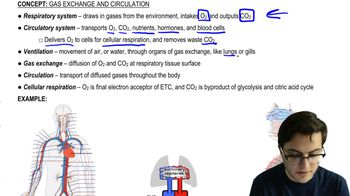
The respiratory system facilitates gas exchange, supplying oxygen to blood and removing carbon dioxide.
Oxygen from the respiratory system is used in cellular respiration to produce energy; carbon dioxide is a waste product expelled by breathing.
Earthworms exchange gases through moist skin; fish use gills with a countercurrent mechanism to maximize oxygen uptake.
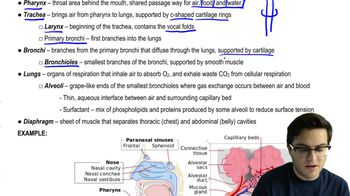
Alveoli are sites of gas exchange; diaphragm controls breathing; larynx produces sound; trachea conducts air to lungs.
Humans use mucus, cilia, and coughing to trap and remove dust, bacteria, and other irritants from airways.
Cold, dry air can reduce moisture in airways, causing irritation and increased mucus production.
Diaphragm contracts and rib muscles expand thoracic cavity, increasing volume and decreasing pressure to draw air in.
Diaphragm relaxes and rib muscles contract, decreasing thoracic volume and increasing pressure to push air out.
Surfactant reduces surface tension in alveoli, preventing collapse and aiding efficient gas exchange.
Homeostasis maintains blood oxygen saturation (SpO2) by adjusting breathing rate to meet oxygen demand.