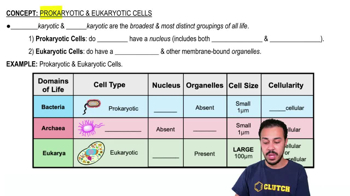
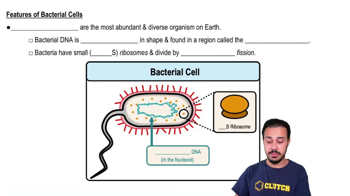
Key adaptations include cell walls made of peptidoglycan, protective capsules, fimbriae for attachment, and flagella for movement.
Differences between Bacteria and Archaea cell walls
Bacteria have peptidoglycan in their cell walls, while Archaea lack peptidoglycan and have unique membrane lipids.
Gram-positive vs. Gram-negative bacteria
Gram-positive bacteria have thick peptidoglycan walls and stain purple; Gram-negative have thin walls with an outer membrane and stain pink, affecting antibiotic resistance.
Mechanisms of genetic diversity in prokaryotes
Includes mutation, transformation (uptake of DNA), transduction (virus-mediated DNA transfer), and conjugation (direct DNA transfer).
Metabolic diversity in prokaryotes
Prokaryotes can be photoautotrophs, chemoautotrophs, heterotrophs, and vary in oxygen requirements (aerobic or anaerobic).
Major clades of bacteria and archaea
Includes extremophiles adapted to harsh environments and nitrogen-fixing species important for ecosystems.
Ecological roles of prokaryotes
Prokaryotes act as decomposers, symbionts, pathogens, and chemical recyclers in ecosystems.
Protists and eukaryotic diversity
Most eukaryotes are protists, showing vast structural and functional diversity.
Endosymbiosis theory
Explains the origin of mitochondria and plastids from engulfed prokaryotes.
Primary vs. secondary endosymbiosis
Primary endosymbiosis involves engulfing a prokaryote; secondary involves engulfing a eukaryotic alga, leading to red and green algae evolution.
Five major eukaryotic supergroups
Excavata, SAR, Archaeplastida, Unikonta, and Rhizaria.
Key protist clades in Excavata
Includes diplomonads and euglenozoans with modified mitochondria.
Key protist clades in SAR
Includes diatoms, brown algae, and apicomplexans.
Key protist clades in Archaeplastida
Includes red algae and green algae, the closest relatives of land plants.
Key protist clades in Unikonta
Includes amoebozoans and opisthokonts (animals and fungi).
Protist nutrition types
Protists can be photoautotrophs, heterotrophs, or mixotrophs.
Protist life cycles
Include alternation of generations and both sexual and asexual reproduction.
 Back
Back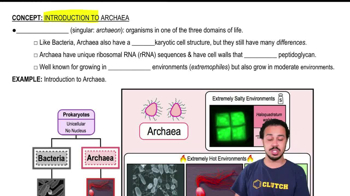
 04:39
04:39