 Back
Backexam 2 practice
 02:18
02:18
Terms in this set (20)
Diffusion is the passive movement of molecules from an area of higher concentration to an area of lower concentration.
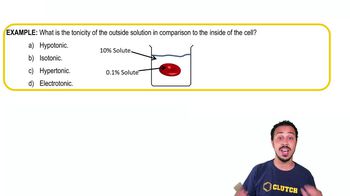
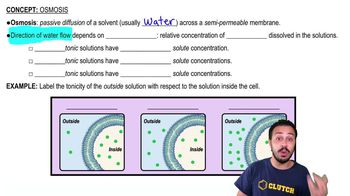
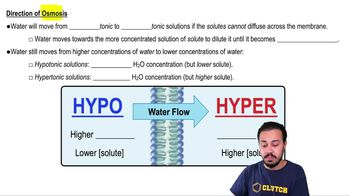
Osmosis is the diffusion of water molecules across a selectively permeable membrane from a region of low solute concentration to high solute concentration.
Photosynthesis converts light energy into chemical energy stored in glucose, producing oxygen as a byproduct.
Photosynthesis mainly occurs in the chloroplasts of plant cells, especially in the leaves.
The two main stages are the light-dependent reactions and the Calvin cycle (light-independent reactions).
Light energy is captured to produce ATP and NADPH, and water is split to release oxygen.
The Calvin cycle uses ATP and NADPH to fix carbon dioxide into glucose in the stroma of chloroplasts.
Carbon dioxide (CO2) is fixed into organic molecules during the Calvin cycle.
Rubisco is the enzyme that catalyzes the fixation of CO2 to ribulose bisphosphate.
ATP provides energy to convert 3-phosphoglycerate into glyceraldehyde-3-phosphate (G3P).
NADPH provides reducing power (electrons) to convert 3-phosphoglycerate into G3P.
Water enters the cell by osmosis, causing the cell to become turgid and firm.
Diffusion is the movement of solutes, while osmosis is the movement of water across a membrane.
Because it does not require light directly and uses ATP and NADPH produced by light-dependent reactions.
One molecule of G3P is produced per three turns of the Calvin cycle.
Diffusion allows oxygen to enter cells and carbon dioxide to exit, facilitating gas exchange.
It allows water to pass but restricts solutes, enabling water movement to balance solute concentrations.
ATP and NADPH produced are used as energy and reducing power in the Calvin cycle.
Turgor pressure is the pressure of water inside the cell against the cell wall, maintaining cell rigidity.
Glucose is used for energy, stored as starch, or used to build other organic molecules.