 Back
BackEXAM#1
 04:39
04:39
Terms in this set (20)
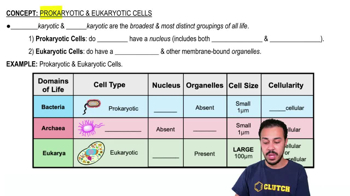
Prokaryotes are organisms that lack membrane-bound organelles and a true nucleus, including bacteria and archaea.
Prokaryotes have no nucleus, smaller size (0.5-5µm), always have a cell wall, and lack membrane-bound organelles, unlike eukaryotes.
Bacilli (rod-shaped), cocci (spherical), and spirilla (spiral-shaped) are common prokaryotic shapes.
Peptidoglycan is a network of sugar polymers cross-linked by polypeptides found in bacterial cell walls.
Gram-positive bacteria have thick peptidoglycan walls and stain purple; gram-negative have thin peptidoglycan and an outer membrane, staining pink/red.
Endospores are metabolically inactive, highly resistant structures that allow bacteria to survive harsh conditions for centuries.
Fimbriae help bacteria stick to surfaces; pili (sex pili) are longer and enable DNA exchange between bacteria.
Chemotaxis is bacterial movement toward or away from chemical stimuli, often using flagella for motility.
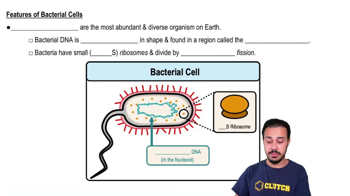
Prokaryotes have a circular chromosome located in the nucleoid region and may have smaller DNA rings called plasmids.
Prokaryotes reproduce asexually by binary fission; diversity arises from rapid reproduction, mutations, and genetic recombination.
Transformation: uptake of external DNA; transduction: virus-mediated DNA transfer; conjugation: direct DNA transfer via pili.
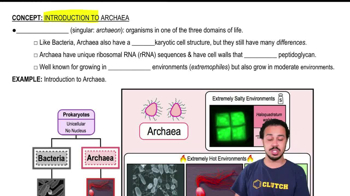
Archaea are prokaryotes without peptidoglycan, often extremophiles living in high salt, temperature, or anaerobic environments.
Prokaryotes recycle chemical elements, decompose organic matter, enhance soil nutrients, and form symbiotic relationships with plants and animals.
The Gram stain differentiates bacteria by cell wall composition, aiding identification and treatment decisions.
The flagellum is a rotary motor structure that enables bacterial motility through liquid environments.
The nucleoid is the region in prokaryotic cells where the circular chromosome DNA is located, not enclosed by a membrane.
Plasmids are small, circular DNA molecules that carry genes beneficial for survival, such as antibiotic resistance.
Some prokaryotes fix atmospheric nitrogen into forms usable by plants, playing a key role in the nitrogen cycle.
Autotrophs produce their own energy (e.g., photosynthesis), while heterotrophs obtain energy by consuming organic compounds.
Metabolic diversity allows prokaryotes to inhabit diverse environments and utilize various energy and carbon sources.