 Back
BackFungi + Reproduction

 08:59
08:59
Terms in this set (40)
Fungi classification + ecological role
Heterotrophic eukaryotes, decomposers
Mutualists
Fungi that have a two-way beneficial relationship with another organism
Endophytes
Symbiotes that function with plants
Lichens
Symbiotes that function with photosynthesizers (algae+cyanobacteria)
Obligate relationships
Fungi depend on symbiosis to exist
Facultative
Fungi can participate in symbiosis, not necessary
Mycosis
Fungal infection of animals
Cellulose + Lignin
Two main plant materials fungi are in charge of decomposing, especially compared to other organisms (hard to break down)
Carbon benefit of fungi + technical name
Release trapped carbon from the inside of plants into the atmosphere that would otherwise be unattainable, called saprophytes
Yeast
Unicellular fungi (most are not)
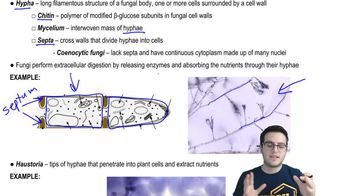
Hyphae
Long filaments of cells surrounded by a rigid cell wall
Septa
Divider between each of the cells in hyphae
Chitin
Cell wall material of hyphae
Mycelium
Entire cluster of a fungus' hyphae
Coenocytic fungi
Fungi that lack septa, rather are made of one long and continuous cytoplasm
Extracellular digestion
How fungi feed, release enzymes into the earth and absorb nutrients that have been broken down
Haustoria
Tips of hyphae that are able to penetrate through the roots of plants
Mycorrhizae
Symbiosis of fungi and the roots of plants
Ectomycorrhizae
Sheets of hyphae exist on the outsides of plants without penetrating
Endomycorrhizae (arbuscular)
Penetration of cortical cells in plant roots
Deuteromycetes
Fungi that only reproduce asexually
Fruiting bodies
Spore-producing structures used in sexual and asexual reproduction
Mating types
Classification of attraction between mate fungi that don't involve sex, over 1000 types for certain species, pheromones used
Fertilization
The fusion of hyphae and nuclei to reproduce (except Chytrids)
Plasmogamy
The fusion of hyphae due to cytoplasm linkages
Heterokaryotic
2+ haploid nuclei that are genetically distinct
Dikaryotic
Cell containing 2 nuclei of the same type simultaneously
Karyogamy
Final stage of reproduction where nuclei fuse and create a zygote
Chytrids
Follow alteration of generations + have gametes
Zoospores
Flagellated spores created during the process of alteration of generations
Zygomycete reproduction
Plasmogamy leads to the formation of zygosporangium, then go into karyogamy
Zygosporangium
Germinates, then ruptures, releasing spores around
Sporangiophores
Asexual reproduction, stalks with sporangia in their tips
Basidiomycetes
reproductive structures of eukaryotic hyphae that have basidia on their ends
Basidia
spore-producing cells where karyogamy occurs
Basidiocamp
fruiting body formed from mycelia reproduction (mushroom head)
Ascomycota
reproductive structure that forms asci on ends
Asci
spore-producing structures that produce 8 haploid spores, go through meiosis and mitosis to get 8
Ascospores and ascocarp
Spores produced in asci, fruiting body
Conidia
spores produced through asexual reproduction that can be used later for sexual reproduction