Robert Hooke was the first recorded person to observe cells and cell walls in the 1600s-1700s.
What did Antoni van Leeuwenhoek contribute to microscopy?
He created his own microscopes and observed 'animalcules', early observations of microorganisms.
What is the principle of a Light Microscope (LM)?
Visible light passes through a specimen and glass lenses that refract the light to magnify the image, up to ~1,000x life-size.
Define magnification in microscopy.
Magnification is the ratio of an object's image size to its real size.
What is resolution in microscopy?
Resolution is the measure of image clarity, the minimum distance two points can be separated and still be distinguished.
Why is contrast important in microscopy?
Contrast is the difference in brightness between light and dark areas, helping distinguish structures in the image.
What are the limitations of Light Microscopes?
LMs cannot resolve most subcellular structures and organelles because they are too small to be seen clearly.
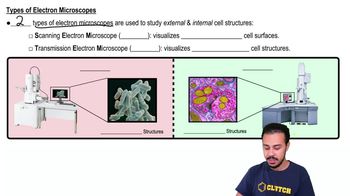
What is the main difference between Scanning Electron Microscopes (SEM) and Transmission Electron Microscopes (TEM)?
SEM focuses electrons on specimen surfaces producing 3D images; TEM passes electrons through specimens to study internal structures with higher resolution.
What is cell fractionation?
A technique that breaks cells and separates components by centrifugation based on size to isolate organelles for study.
What are the basic features common to all cells?
All cells have a plasma membrane, cytosol, chromosomes, and ribosomes.
How do prokaryotic cells differ from eukaryotic cells?
Prokaryotes lack a nucleus and membrane-bound organelles, have DNA in a nucleoid, and are usually smaller than eukaryotes.
What is the plasma membrane composed of?
A double layer of phospholipids forming a selective barrier that regulates passage of oxygen, nutrients, and waste.
Why is the surface area to volume ratio important for cells?
Smaller cells have a greater surface area to volume ratio, facilitating efficient diffusion of materials.
What is the function of the nucleus in eukaryotic cells?
The nucleus stores most of the cell's DNA and genes, organizing DNA into chromosomes and controlling gene expression.
What are ribosomes and their role?
Ribosomes are composed of rRNA and protein; they synthesize proteins using information from DNA.
What organelles are part of the endomembrane system?
Includes nuclear envelope, endoplasmic reticulum, Golgi apparatus, lysosomes, vacuoles, and plasma membrane.
What are the two types of endoplasmic reticulum and their functions?
Smooth ER synthesizes lipids, metabolizes carbohydrates, detoxifies poisons, and stores calcium ions; Rough ER has ribosomes and secretes proteins and glycoproteins.
What is the Golgi apparatus's role?
Modifies products from the ER, manufactures macromolecules, produces glycolipids, and sorts/packages materials into vesicles.
What is the function of lysosomes?
Lysosomes contain hydrolytic enzymes to digest macromolecules, participate in phagocytosis, and recycle cell components via autophagy.
What is the endosymbiont theory?
Eukaryotic cells evolved when an ancestor engulfed oxygen-using prokaryotes (mitochondria) and photosynthetic prokaryotes (chloroplasts).
What are mitochondria and their function?
Organelles in eukaryotic cells that perform cellular respiration to generate ATP, with a double membrane and their own DNA.
Describe chloroplast structure and function.
Chloroplasts have inner and outer membranes, thylakoids stacked into grana, and stroma; they capture light energy for photosynthesis.
What are peroxisomes and their role?
Membranous sacs containing enzymes that detoxify harmful substances and convert hydrogen peroxide into water and oxygen.
What is the cytoskeleton and its functions?
A network of fibers (microtubules, microfilaments, intermediate filaments) that support cell shape, organize structures, and enable motility.
What are microtubules and their roles?
Hollow rods made of tubulin that shape the cell, guide organelle movement, and separate chromosomes during cell division.
What are microfilaments and their functions?
Thin rods of actin that bear tension, support cell shape, form microvilli cores, and enable muscle contraction.
What are intermediate filaments?
Fibers with diameter between microtubules and microfilaments that reinforce cell shape and fix organelles in place, more permanent than others.
What is the plant cell wall composed of and its function?
Made of cellulose microfibrils embedded in polysaccharides and proteins; it protects the cell, maintains shape, and prevents excess water uptake.
What is the extracellular matrix (ECM) in animal cells?
A network outside the plasma membrane made of glycoproteins like collagen and fibronectin that bind cells and facilitate communication.
What are cell junctions and their types?
Structures that connect neighboring cells: plasmodesmata in plants; tight junctions, desmosomes, and gap junctions in animals.
 Back
Back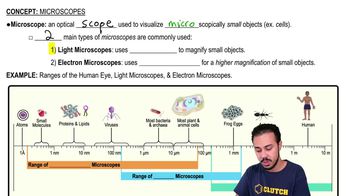
 06:35
06:35