 Back
BackGeneral Biology: Cell Biology and Membranes
 06:35
06:35
Terms in this set (27)
All living things are composed of cells and all cells come from other cells.
Magnification increases image size; Resolution measures image clarity and the ability to distinguish two close objects.
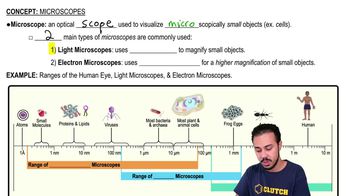
Uses visible light and glass lenses to magnify specimens; resolution limit about 0.2μm; max useful magnification ~1000X.
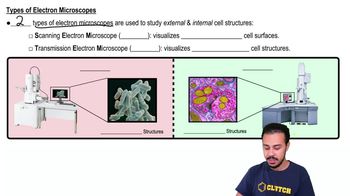
Use electron beams for higher resolution; include Scanning EM (SEM) for 3D surface images and Transmission EM (TEM) for internal structures.
Small, simple cells without membrane-bound organelles; contain a nucleoid region with DNA; examples include bacteria and archaea.
Plasma membrane, ribosomes, cytosol, DNA, and cytoplasm.
Rigid, chemically complex shell outside the plasma membrane; protects and maintains cell shape.
Sticky outer coat that helps cells adhere to surfaces or other cells; not present in all prokaryotes.
Long projections that propel cells through their environment; found in some prokaryotes and animal sperm cells.
Membrane-bound structures including nucleus, ER, Golgi apparatus, lysosomes, mitochondria, chloroplasts, cytoskeleton, and more.
Contains genetic material (DNA) and controls cell activities by directing protein synthesis.
Non-membranous organelles that synthesize proteins; free ribosomes make cytosolic proteins, bound ribosomes make proteins for export or membranes.
Network of membranes; Rough ER has ribosomes and synthesizes proteins; Smooth ER synthesizes lipids, stores calcium, and detoxifies.
Processes, modifies, and ships molecules produced by the ER; adds molecular tags and directs products to destinations.
Membrane sacs with digestive enzymes; digest food, recycle damaged components, and destroy pathogens.
Site of cellular respiration; double membrane with folded inner membrane (cristae) to increase surface area for ATP production.
Organelles for photosynthesis in plants; contain thylakoids with chlorophyll and stroma with DNA and enzymes.
Mitochondria and chloroplasts originated as prokaryotes engulfed by early eukaryotic cells, forming a symbiotic relationship.
Network of protein fibers (microtubules, microfilaments, intermediate filaments) that support cell shape, enable movement, and organize organelles.
Fluid mosaic model: phospholipid bilayer with embedded proteins; selectively permeable to regulate material flow.
Movement of molecules down their concentration gradient without energy; includes simple diffusion and facilitated diffusion via transport proteins.
Osmosis is water diffusion across membranes; tonicity describes solute concentration effects: isotonic (equal), hypotonic (lower outside), hypertonic (higher outside).
Energy-requiring process moving solutes against concentration gradient using transport proteins and ATP (e.g., sodium-potassium pump).
Processes for bulk transport: endocytosis brings materials into the cell; exocytosis expels materials via vesicles.
Biological catalysts that lower activation energy to speed reactions; highly specific to substrates and have optimal conditions for activity.
Primary energy carrier; hydrolysis releases energy for cellular work; ATP is renewable by phosphorylation of ADP.
Competitive inhibitors bind active site; non-competitive inhibitors bind elsewhere causing shape change; feedback inhibition regulates pathways.