 Back
BackGeneral Biology: Cell Structure and Function
 06:35
06:35
Terms in this set (24)
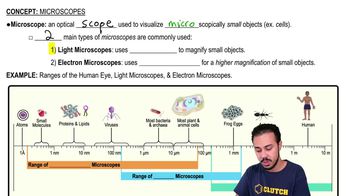
Magnification is the increase in an object’s image size compared with its actual size.
Resolution is the ability of an instrument to show two nearby objects as separate, indicating image clarity.
1. All living things are composed of cells.
2. All cells come from other cells.
The plasma membrane is a phospholipid bilayer with embedded proteins that regulate molecule passage.
Channel proteins form tunnels that shield ions and hydrophilic molecules as they pass through the membrane's hydrophobic center.
Cytosol is the thick, jellylike fluid inside cells that suspends cellular components.
Prokaryotic cells lack a membrane-enclosed nucleus and membrane-bound organelles, unlike eukaryotic cells.
The nucleoid is the region where the cell's DNA is located in prokaryotic cells.
1. Genetic control (nucleus, ribosomes)
2. Manufacture, distribution, breakdown (ER, Golgi, lysosomes)
3. Energy processing (mitochondria, chloroplasts)
4. Structural support and communication (cytoskeleton, plasma membrane)
The nucleus houses DNA and directs protein synthesis via messenger RNA (mRNA).
Ribosomes are composed of ribosomal RNA and proteins; they synthesize proteins according to DNA instructions.
Smooth ER synthesizes lipids and processes toxins.
Rough ER has ribosomes and produces membranes and secretory proteins.
The Golgi apparatus modifies, sorts, and ships products from the ER to other organelles or the cell surface.
Lysosomes contain enzymes that digest ingested substances and damaged organelles.
Vacuoles are large vesicles that store molecules and wastes; some protists have contractile vacuoles for water regulation.
Mitochondria have two membranes and carry out cellular respiration to harvest chemical energy from food.
Chloroplasts convert solar energy to chemical energy through photosynthesis in plants and algae.
The theory states mitochondria and chloroplasts evolved from small prokaryotes living inside larger cells.
Microfilaments, intermediate filaments, and microtubules maintain cell shape, anchor organelles, and enable movement.
Both have a '9 + 2' microtubule arrangement; flagella are longer and move with a whip-like motion, cilia beat like oars.
The ECM binds tissue cells, supports the plasma membrane, and communicates with the cytoskeleton.
Tight junctions form leakproof sheets, anchoring junctions provide strong tissue connections, gap junctions allow molecule flow between cells.
The plant cell wall protects, provides skeletal support, and is primarily composed of cellulose.
Plasmodesmata are cell junctions that allow plant tissues to share water, nourishment, and chemical messages.