Back

General Biology: Cell Structure, Membranes, and Cell Communication

Control buttons has been changed to "navigation" mode.
1/20
  • What are phospholipids and why are they important in cell membranes?

    Phospholipids are amphipathic molecules with hydrophilic heads and hydrophobic tails that form the lipid bilayer, creating a selective barrier in cell membranes.
  • Define amphipathic molecules.

    Molecules that have both hydrophilic (water-attracting) and hydrophobic (water-repelling) regions, like phospholipids.
  • What is the fluid mosaic model of the plasma membrane?

    A model describing the membrane as a fluid combination of lipids, cholesterol, and proteins that move laterally within the layer.
  • Name three factors that determine plasma membrane fluidity.

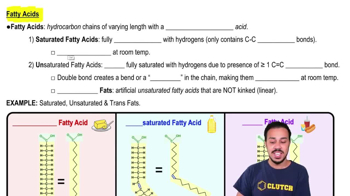
    1. Lipid composition (saturated vs. unsaturated fatty acids), 2. Cholesterol content, 3. Temperature.
  • What are the three categories of transmembrane proteins and their functions?

    1. Transport proteins (move molecules), 2. Enzymatic proteins (catalyze reactions), 3. Signal transduction proteins (receive signals).
  • Which types of molecules cross the plasma membrane easily?

    Small nonpolar molecules and gases like O2 and CO2 cross easily; large or charged molecules require assistance.
  • Explain passive transport across the plasma membrane.

    Movement of molecules down their concentration gradient without energy, including simple diffusion, osmosis, and facilitated diffusion.
  • Why does active transport require ATP?

    Because it moves molecules against their concentration gradient, which requires energy input from ATP hydrolysis.
  • What is the role of the Sodium-Potassium Pump?

    It actively transports Na+ out and K+ into the cell, maintaining electrochemical gradients essential for cell function.
  • Differentiate prokaryotes and eukaryotes.

    Prokaryotes lack a nucleus and membrane-bound organelles; eukaryotes have a nucleus and complex organelles.
  • What is the endomembrane system?

    A group of membranes and organelles in eukaryotic cells that work together to modify, package, and transport lipids and proteins.
  • Name three organelles and their functions.

    1. Mitochondria: ATP production, 2. Ribosomes: protein synthesis, 3. Golgi apparatus: protein modification and sorting.
  • What is the function of the cytoskeleton?

    Provides structural support, facilitates intracellular transport, and enables cell movement.
  • List the three types of cytoskeletal fibers and one function each.

    1. Microfilaments: cell shape and movement, 2. Intermediate filaments: mechanical support, 3. Microtubules: vesicle transport and cell division.
  • How do motor proteins interact with the cytoskeleton?

    Motor proteins like kinesin move along microtubules or actin filaments to transport vesicles and organelles within cells.
  • What is actin-myosin and its role?

    A protein complex involved in muscle contraction and cellular movement by sliding actin filaments.
  • What are the three stages of cell signaling?

    1. Reception: signal detected by receptor, 2. Transduction: signal relayed and amplified, 3. Response: cellular action triggered.
  • Name five types of cell-to-cell communication.

    Endocrine, paracrine, autocrine, direct contact (gap junctions/plasmodesmata), and synaptic signaling.
  • How do cell surface receptors respond to signals?

    They bind specific ligands, triggering conformational changes that initiate intracellular signaling cascades.
  • Why is signal transduction and amplification important?

    It ensures a small number of signaling molecules can produce a large cellular response efficiently.