 Back
BackGeneral biology evolution exam 4
 07:48
07:48
Terms in this set (117)
5 agents of microevolution
Mutation, gene flow, genetic drift, non random mating, natural selection
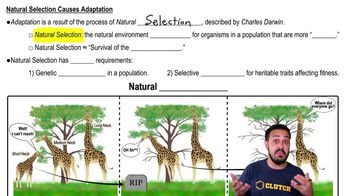
Natural selection
Process by which organisms that are better adapted to their environment tend to survive and reproduce more than those less adapted.
Evidence of evolution 6 things
Radiometric dating, fossil record, competitive morphology and embryology, island biogeography, genetic modification, experimental evidence
Common descent with modification
All species share a common ancestor, but over time lineages have changed, leading to the diversity of life
Mutation
A permanent alteration in DNA that serves as the ultimate source of new genetic variation (alleles) in a population. While many mutations are harmful or neutral, they can introduce beneficial traits that raw material for natural selection to act upon
Gene flow
Movement of alleles between populations usually occurs through migration
Genetic drift
Random fluctuations in allele frequencies that happen by chance, which have a significantly greater impact on smaller populations. It can cause rare alleles to be lost or become common, reducing genetic variation within a population. Examples include the founder effect and bottleneck effect.
Non random mating
Sexual selection influence success situation in which some individuals reproduce more than others
Natural selection
A process where organisms with favorable traits (due to allele variations) are more likely to survive and reproduce, increasing the frequency of those advantageous alleles over generations. It is the only process that consistently leads to adaptation to the environment.
3 modes of natural selection
Stabilizing, directional, distuptive
Stabilizing natural selection
Intermediate phenotypes are favored over extreme ones
Directional mode of natural selection
Individuals with a trait at one extreme of the phenotypic range have higher fitness than those with intermediate or opposite extreme traits.
Disruptive mode of natural selection
Individuals with extreme phenotypes have higher fitness than those with intermediate traits. Favors extremes, reduces intermediates
Species
Groups of actual or potential interbreeding natural populations reproductively isolated from other such groups
Branching evolution (speciation)
A single parent species diverges into two species the parent species continuing while a second species arises from it
Geographic separation
Changing an environment allopatric speciation
extrinsic isolating mechanism
Geographic or environmental barrier that physically prevents two populations or species from interbreeding
Intrinsic isolating mechanism
The evolution of internal characteristics that prevent organisms from breeding
Ecological isolation
Reproductive isolation due to Occupying different habitats or niches
Temporal isolation
Breed at different times or seasons
Behavioral isolation
Courtship, rituals, response or attractiveness
Mechanical isolation
Morphological or anatomical incompatible
Gametic isolation
Biochemical or cellular incompatible
Hybrid inviability, or infertility
Infertile or unable to survive
sympatric speciation
Populations come to be reproductively is isolated, even though they share the same geographical area
Adaptive radiation
The rapid emergence of many species from a single species that has been introduced to a new environment
Systematics
Establish family trees or phylogenies by reviewing various kinds of evidence radio metric dating fossil record, DNA sequence comparisons
Analogous structure
Biological features in different species that share similar functions but evolved independently rather than from a common ancestor
Homologous structures
Physical features or organs in different species that derived from a common ancestor reflecting, shared ancestry rather than similar function these structures may appear different externally and perform varied roles, but they're underlying anatomy morphology embryology and genetics are similar
cladistics
A common ancestor is defined based on characteristic shared by all members in the group
Two mass extinctions
Permian extinction 96% of all things and the Cretaceous extinction. The most famous dinosaurs died mammals and flowering plants took over.
Cambrian explosion
An event of expansion of animal diversity
Ribozymes
An RNA molecule that functions as a biological catalyst capable of performing specific chemical reaction similar to protein enzymes
Prokaryotes
Bacteria and archaea
Eukaryotes
protista, plantae, animals fungi
Photosynthesis first performed by
Cyanobacteria
Cyanobacteria
Produces oxygen in the atmosphere, eventually forming ozone, allowing oxygen to accumulate
Bryophytes
Mosses liverworts hornworts
Seedless vascular plant
Ferns horse tails club and Spike mosses lycopods
Gymnosperms
Conifer Ginko cycods
Angiosperms
Flowering plants
Arthropods
First land, animals centipede like
Second land animals
Insect first wingless, then winged
Primitive lobe fin fishes
First vertebrates to land first tetrapod
Amphibians came from
Tetrapod
Reptiles came from
Amphibians
Mammals evolved from
Reptiles
Why were reptiles able to move inland
Amniotic egg
Define reptile
Lizard, snakes, crocodiles, alligators and turtles. They employ internal fertilization, ectothermic cold-blooded.
Define Oviparous
Fertilized eggs are laid and develop outside the mother's body
Endothermic
Warm blooded
Things that make up a mammal
Mammory glands, hair, all endothermic, nearly all are viviporous(fertilized eggs develop inside the mother's body)
The three evolutionary lines of mammals defined by reproduction
Monotremes marsupials placentals
Define monotreme
Egg laying mammals duck billed platypus spiny ant eater
Define Marsupials
The young developed to a limited extent internally, the mother kangaroo Oppossum
Define placentals
The young or nourished within the mother through a placenta
Define hominini
Human like primates with smaller canines, thicker tooth, enamel, less sloping face and our bipedal
The last three hominini
Neanderthals Homo sapiens homo erectus
Two hypothesis about evolution of man
Out of Africa, all originated from Africa or multi regional
Who produced more than half of earths oxygen
Microbes
What are responsible for putting atmospheric nitrogen into a form plants can use
Bacteria and archaea
Define bacteria
Single celled organism that is a decomposer breaks down dead organic matter and recycled the resulting elements back into the Earth
What kind of relationship do bacteria and humans have
Mutualistic it benefit, benefits them both
Archaea
Genetically unique from bacteria similar through binary fission
Three classes of extremeophiles
Thermophile halophile anaerobes
Define thermophile
Can survive in extremely hot environments
Define halophile
Can survive an extremely salty environments
Define anaerobes
Organisms that can live without oxygen or are poisoned by it
Endo symbiosis
Biological relationship in which one organism lives inside another. Plasma membrane of an ancestral prokaryote gave rise to Endo membrane components including a nucleus and endoplasmic reticulum
Second stage of Endo symbiosis
In a first Endo symbiotic event, the ancestral eukaryote, consumed aerobic bacteria that evolved into mitochondria
The third stage of Endo symbiosis
In a second end of symbiotic event, the early eukaryote, consumed, photosynthetic bacteria that evolved into chloroplasts
Define Protista
Eukaryotic organism that does not have the defining features of a plant animal or fungus it's microscopic and lives in moist or aquatic environments some pathogens Giardia first organisms to practice sexual reproduction
Produce that perform photosynthesis
Algae
Colonial multicellularity
Solo cells from stable Association with each other, but no specialized roles
True multicellulalarity
Single cells exist in stable groups with different cells specializing in functions
A photosynthesis protist
Phytoplankton
Define phytoplankton
Float near the surface of the water produce most of the earths oxygen
Heterotrophic protist
They acquire nutrients from consuming other organisms or bits of organic matter, developed Celia and flagella to move
Amoeba
Pseudopods they have false feet, plasmodium, slime, mold, and cellular, slime molds, move the same way
Fungi
Heterotrophs webs of slender tubes called hyphae, collective hyphae in a branching web is mycelium
Define basidium
Reproductive structure on mushrooms that produce spores
The four categories of fungi
Club fungi or basidiomcetes, sac fungi or ascomycetes, bread molds or zygomycetes, chytrids
Define basidiomcetes
Club fungi toadstool or shelf mushroom
Define ascomycetes
Sac fungi fruiting bodies have cup shape truffles and morels
Define zygomycetes
Breadmold
Define chytrids
Primitive primarily aquatic fungi
What is yeast?
Any single celled fungus that reproduces through budding
Lichens
Fungi and algae sometimes made a fungi and bacteria
What makes all animal similar?
All animals pass through a blastula stage in embryonic development
Define blastula
Hollow fluid filled ball of cells formed one egg fertilized
What else besides blastula makes animals similar
They are multicellular heterotroph, composed of cells without cell walls
assortive mating
When males and females displayed distinct mating preferences
Founder effect
The phenomenon by which an initial gene pool for a population is established by means of sub populations migrating to a new and isolated area
A genetic bottleneck
Changing in allele frequencies due to chance following a sharp reduction in populations size
Evolution
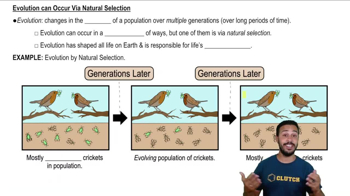
Change in allele frequency
Define speciation
When a single parent species diverges into two species, the parent species continuing while a second species rises from it
Did King Phillip come over for good spaghetti?
Domain kingdom, phylum class order, family, genius species
Lampreys
All vertebrates have jaws except the lamprey
Deuterostomes
The blastopore becomes the anus and the mouth develops as a secondary opening
Blastopore
The opening that forms during early embryonic stage
Ptotostomes
Blastopore becomes the mouth
Porifera
Sponges
Cnidaria
Jellyfish and corals
Platyhelminthes
Flatworms
Annelida
Segmented worms
Mollusca
Oysters snail squid have a mantle
Nematoda
Roundworms; parasites
Anthropoda
Insects lobsters spiders
Echinodermata
Sea stars sea urchins
Chordates possess
Notochord, dorsal nerve chord, pharyngeal slits, post anal tail
3 classes of chordata
Urochordata-sea squirts
Cephalochordata-lancelets
Vertebrata-all the vertebrates including humans
Protist
Single celled eukaryote
Colonial multicellularity
Cells living independent from each form a colony, but remain independent
True multicellularity
Cells are physically connected and interdependent, separated cells cannot live on their own.
Macroevolution
large-scale evolutionary changes occurring at or above the species level over geological time, encompassing the origins of new species, genera, and families
Microevolution
the change in allele frequencies (genetic composition) within a single population or species over a short period, such as a few generations
Darwins observations
1.variation
Overpopulation
Limited resources