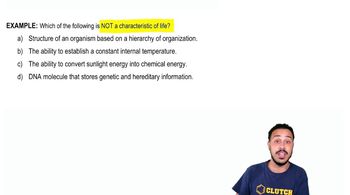
Organisms are alive if they have cellular organization, metabolism, growth, reproduction, response to stimuli, and adaptation through evolution.
Do all organisms have DNA?
Almost all living organisms have DNA as their genetic material, except some viruses which may have RNA.
Why aren’t viruses considered alive?
Viruses lack cellular structure and cannot reproduce independently; they require a host cell, so they are not considered fully alive.
What is the significance of hemochromatosis gene prevalence in Western Europeans?
The gene causing hemochromatosis may have been selected for because it provided increased immunity to the bubonic plague by affecting iron in macrophages.
Why is albinism unusually frequent in the Hopi tribe?
Albinism is 100 times more prevalent in the Hopi tribe, possibly due to genetic drift or selection pressures that did not eliminate the gene.
How might Type 1 Diabetes susceptibility relate to the last ice age?
Type 1 Diabetes may have been advantageous in cold climates by increasing blood glucose and water loss, lowering blood freezing point.
What is natural selection?
Natural selection is the process where organisms better adapted to their environment tend to survive and produce more offspring.
Who independently proposed the theory of evolution?
Charles Darwin and Alfred Russel Wallace independently proposed the theory of evolution by natural selection.
What did Gregor Mendel discover?
Mendel discovered the principles of inheritance using pea plants, showing traits are passed from parents to offspring.
Define genotype and phenotype.
Genotype is the genetic makeup; phenotype is the observable traits resulting from genotype and environment.
What is the central dogma of biology?
The central dogma describes the flow of genetic information: DNA → mRNA → Protein.
What are codons?
Codons are triplet nucleotides in mRNA that specify which amino acid is added during protein synthesis.
Why are proteins important in genetics?
Proteins are the end products of gene expression and determine cell function and phenotype.
What is the significance of the common origin of life?
All life shares a common origin, supported by similarities in gene structure and DNA sequences across species.
What are homologous chromosomes?
Homologous chromosomes are pairs of chromosomes, one from each parent, that carry genes for the same traits.
What is the difference between somatic and germ-line cells?
Somatic cells are body cells; germ-line cells are reproductive cells that pass genetic information to offspring.
What is an allele?
An allele is a variant form of a gene found at a specific locus on a chromosome.
What phases are included in the cell cycle?
The cell cycle includes G1, Synthesis (S), G2, and Mitosis phases.
What happens during mitosis?
Mitosis is the process where a cell divides to produce two genetically identical daughter cells.
What is genetic linkage?
Genetic linkage occurs when genes located close together on the same chromosome tend to be inherited together.
 Back
Back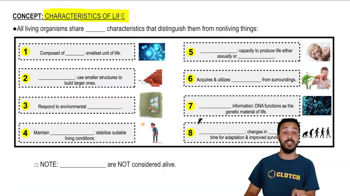
 09:26
09:26