 Back
BackGeneral Biology: Human and Animal Respiratory Systems
 07:48
07:48
Terms in this set (18)
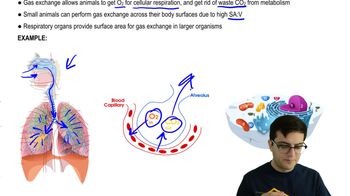
Ventilation (breathing air in and out), external respiration (oxygen and carbon dioxide exchange between lungs and blood), and internal respiration (gas exchange between blood and body tissues).
Diffusion (simple organisms), gills (fish and aquatic animals), tracheal system (insects), and lungs (amphibians, reptiles, mammals).
Air contains more oxygen than water. Cold water holds more oxygen than warm water. Freshwater holds more oxygen than saltwater.
Gills have thin filaments with many lamellae providing a large surface area and use countercurrent flow to maximize oxygen diffusion into blood.
Air has higher oxygen concentration and is less dense and viscous than water, requiring less energy to move over respiratory surfaces.
A network of air tubes (tracheae) that deliver oxygen directly to tissues without using blood for transport.
Flying increases oxygen demand, so insects actively ventilate to increase airflow and meet metabolic needs.
Tiktaalik had both gills and lungs, showing adaptations for breathing in water and air during the transition to land.
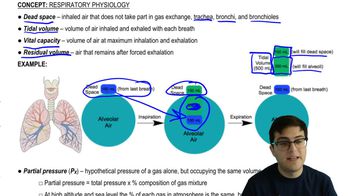
Air passes through the nose/mouth → pharynx → larynx → trachea → bronchi → bronchioles → alveoli.
Nose/mouth: air entry; pharynx/larynx: air passage and voice; trachea/bronchi: air tubes; alveoli: gas exchange sites.
Surfactants reduce surface tension in alveoli, preventing collapse and aiding lung expansion during breathing.
Higher metabolic rates require more efficient respiratory systems to supply oxygen and remove carbon dioxide.
Includes nose, pharynx, larynx, trachea, bronchi, bronchioles, and alveoli; functions to conduct air and exchange gases.
Smoking damages respiratory tissues, reduces lung function, increases risk of diseases like cancer and emphysema.
Diaphragm and rib muscles expand the chest cavity, lowering pressure inside lungs and drawing air in.
The medulla oblongata controls breathing by monitoring carbon dioxide levels in the blood.
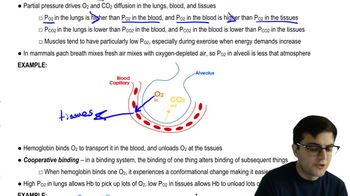
Oxygen binds to hemoglobin in red blood cells for transport; carbon dioxide is carried dissolved, as bicarbonate, or bound to hemoglobin.
Hemoglobin binds oxygen in the lungs, transports it to tissues, and helps carry carbon dioxide back to the lungs.