 Back
BackGeneral Biology I - Cell Structure and Function
 06:35
06:35
Terms in this set (29)
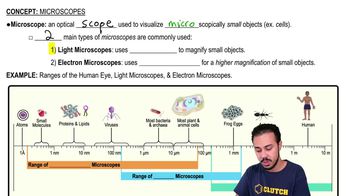
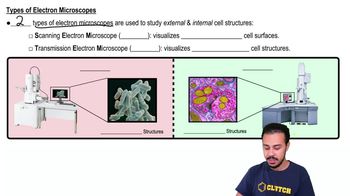
Microscopes allow visualization of cells and their structures, enabling understanding of cell function and discovery of organelles.
1. All living organisms are made of cells.
2. All cells come from pre-existing cells.
Prokaryotic cells lack a nucleus and membrane-bound organelles; eukaryotic cells have a nucleus and organelles.
The cell membrane is a phospholipid bilayer with proteins that controls substance entry and exit, maintaining homeostasis.
Plant cells have a cell wall, chloroplasts, and a large central vacuole; animal cells lack these but have centrioles and lysosomes.
They have double membranes, their own DNA, and reproduce independently, suggesting they evolved from engulfed prokaryotes.
The cytoskeleton includes microfilaments, intermediate filaments, and microtubules, providing structure and transport pathways.
Tight junctions seal cells together; anchoring junctions attach cells; gap junctions allow communication.
1. Genetic control (nucleus)
2. Manufacture, distribution, breakdown (ER, Golgi)
3. Energy processing (mitochondria, chloroplasts)
4. Structural support, movement, communication (cytoskeleton, ECM)
Cell theory states that cells are the basic unit of life and all cells arise from other cells.
The cell wall provides structural support and protection to plant, fungal, and prokaryotic cells.
Cellular metabolism includes all chemical reactions that occur within a cell to maintain life.
The central vacuole stores water and nutrients, maintains turgor pressure, and aids in waste disposal.
The centrosome organizes microtubules and is important for cell division.
Chloroplasts conduct photosynthesis, converting light energy into chemical energy.
Chromatin is DNA-protein complex in a relaxed state; chromosomes are condensed chromatin during cell division.
Cilia and flagella are appendages that aid in cell movement and fluid flow across cells.
Cytoplasm is the cell contents between the plasma membrane and nucleus, including cytosol and organelles.
Cytosol is the fluid portion of the cytoplasm where many metabolic reactions occur.
The endomembrane system regulates protein and lipid synthesis, transport, and detoxification.
Rough ER has ribosomes and synthesizes proteins; smooth ER synthesizes lipids and detoxifies chemicals.
The Golgi apparatus modifies, sorts, and packages proteins and lipids for transport.
The endosymbiont theory proposes mitochondria and chloroplasts originated from free-living prokaryotes engulfed by ancestral eukaryotic cells.
Lysosomes contain enzymes that digest macromolecules and recycle cellular waste.
The plasma membrane is a selective barrier that regulates the cell's chemical composition.
Ribosomes synthesize proteins by translating mRNA.
Peroxisomes break down fatty acids and detoxify harmful substances using enzymes.
Motor proteins move organelles along cytoskeletal tracks using ATP energy.
The nuclear envelope is a double membrane that encloses the nucleus and controls molecule passage.