 Back
BackGeneral Biology I: Macromolecules and Functional Groups
 02:00
02:00
Terms in this set (25)
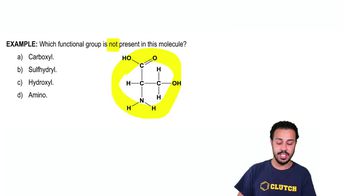
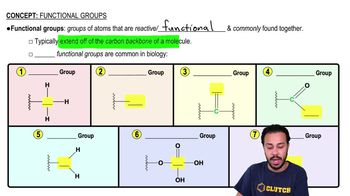
Hydroxyl, carbonyl, carboxyl, amino, phosphate, and methyl groups are key functional groups that affect molecule properties and reactivity.
A chemical reaction that removes water to join monomers into polymers.
A chemical reaction that adds water to break polymers into monomers.
Composed of monosaccharides, disaccharides, and polysaccharides; provide energy and structural support.
Simple sugars like glucose that serve as monomers for carbohydrates.
Two monosaccharides joined by a dehydration reaction, e.g., sucrose.
Starch and glycogen store energy; cellulose and chitin provide structural support.
Hydrophobic molecules including triglycerides, phospholipids, and steroids.
Fats composed of glycerol and three fatty acids; store energy.
Contain two fatty acids and a phosphate group; form cell membranes.
Lipids with a four-ring structure, e.g., cholesterol and anabolic steroids.
Primary: amino acid sequence; secondary: alpha helices and beta sheets; tertiary: 3D folding; quaternary: multiple polypeptides.
Monomer of proteins; contains an amino group, carboxyl group, and side chain.
Covalent bond linking amino acids in a protein.
Loss of protein structure and function due to environmental changes.
Polymers of nucleotides that store and transmit genetic information.
Double helix nucleic acid storing genetic instructions.
Nucleic acid involved in gene expression and protein synthesis.
Monomer of nucleic acids; consists of a sugar, phosphate group, and nitrogenous base.
Segment of DNA that codes for a protein.
Process by which information from a gene is used to synthesize a functional product.
Hydrophobic molecules repel water; hydrophilic molecules attract water.
Saturated have no double bonds; unsaturated have one or more double bonds affecting fluidity.
Unsaturated fats with trans double bonds; associated with health risks.
Synthetic variants of testosterone that promote muscle growth.