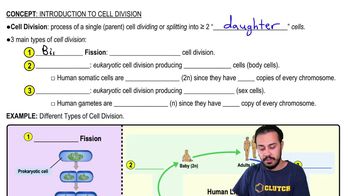
Sexual reproduction involves two parents and produces genetically diverse offspring; asexual reproduction involves one parent and produces genetically identical offspring.
Diploid vs Haploid
Diploid cells have two sets of chromosomes (2n), one from each parent; haploid cells have one set of chromosomes (n), typical of gametes.
Mitosis vs Meiosis
Mitosis produces two identical diploid somatic cells; meiosis produces four genetically diverse haploid gametes.
Somatic cell vs Reproductive cell
Somatic cells are body cells with diploid chromosome number; reproductive cells (gametes) are haploid and involved in sexual reproduction.
Importance of meiosis
Meiosis reduces chromosome number by half to produce haploid gametes and increases genetic variation through crossing over during prophase I.
Homologous chromosomes
Pairs of chromosomes, one from each parent, that are similar in shape and gene sequence; found paired during meiosis I.
Genetic variation in sexual vs asexual reproduction
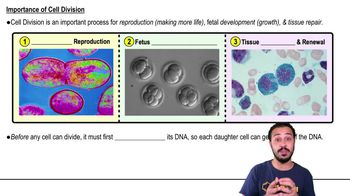
Sexual reproduction creates variation via meiosis and fertilization; asexual reproduction produces clones with little variation.
Cell division in prokaryotes and eukaryotes
Essential for growth, repair, and reproduction; prokaryotes divide by binary fission, eukaryotes by mitosis or meiosis.
Binary fission in prokaryotes
A form of asexual reproduction where the cell duplicates its DNA and divides into two identical daughter cells.
Prokaryotic vs Eukaryotic chromosomes
Prokaryotes have a single circular chromosome; eukaryotes have multiple linear chromosomes within a nucleus.
Sister chromatids
Identical copies of a chromosome connected at the centromere formed during DNA replication; separated during mitosis.
Phases of the cell cycle
Includes G1 (growth), S (DNA replication), G2 (preparation), and M (mitosis and cytokinesis); checkpoints regulate progression.
Phases of mitosis
Prophase, metaphase, anaphase, telophase; each phase involves specific chromosome and spindle behaviors.
Cytokinesis in animal vs plant cells
Animal cells divide by cleavage furrow; plant cells form a cell plate to separate daughter cells.
Cancerous vs healthy cells
Cancer cells divide uncontrollably, ignore growth signals, and can form malignant tumors; benign tumors do not spread.
Human chromosome organization
Humans have 46 chromosomes: 44 autosomes and 2 sex chromosomes (XX or XY) in somatic cells.
Somatic cells vs gametes
Somatic cells are diploid body cells; gametes are haploid reproductive cells produced by meiosis.
Phases of meiosis I and II
Meiosis I: Prophase I (crossing over), metaphase I, anaphase I, telophase I; Meiosis II: similar to mitosis, separates sister chromatids.
Gregor Mendel's experiments
Used pea plants to discover inheritance patterns and formulate laws of segregation and independent assortment.
Dominant vs recessive alleles
Dominant alleles express their trait when present; recessive alleles express only when dominant is absent.
Genotype vs phenotype
Genotype is the genetic makeup; phenotype is the observable traits resulting from the genotype.
Purpose of Punnett Squares
Used to predict genotypic and phenotypic ratios of offspring from genetic crosses.
DNA location of genetic information
Genetic information is stored in the sequence of nucleotide bases within the DNA molecule.
Protein synthesis main parts
Transcription (in nucleus) and translation (in cytoplasm) are the two main stages of protein synthesis.
mRNA vs tRNA
mRNA carries the genetic code from DNA; tRNA brings amino acids to the ribosome during translation.
Introns vs exons
Introns are non-coding sequences removed from mRNA; exons are coding sequences expressed in proteins.
DNA mutations vs chromosomal mutations
DNA mutations affect nucleotide sequences; chromosomal mutations involve large-scale changes like deletions or rearrangements.
Evolution and natural selection
Evolution is change in species over time; natural selection is survival and reproduction of organisms best adapted to their environment.
Levels of biological classification
Domain, Kingdom, Phylum, Class, Order, Family, Genus, Species; genus and species form the scientific name.
 Back
Back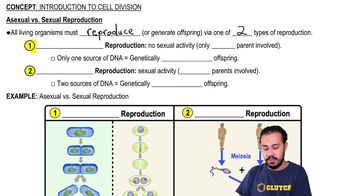
 04:45
04:45