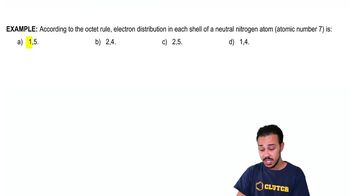
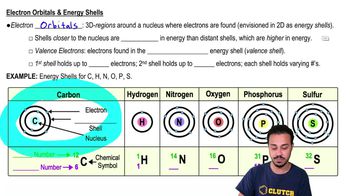
The most abundant atoms in living things are carbon, hydrogen, oxygen, and nitrogen.
Types of chemical bonds in biology
Covalent bonds involve sharing electrons; non-covalent bonds include hydrogen bonds, ionic bonds, and hydrophobic forces.
Importance of pH in the lab
pH affects enzyme activity and chemical reactions; acids and buffers maintain stable pH in biological systems.
Definition of solution components
Solute is the substance dissolved; solvent is the dissolving medium; concentration is often expressed in moles or percent solution.
Monomers and polymers of major macromolecules
Carbohydrates: monomers are monosaccharides; proteins: amino acids; nucleic acids: nucleotides; lipids do not have true monomers.
Major functions of macromolecules
Carbohydrates provide energy; proteins perform structural and enzymatic roles; nucleic acids store genetic information; lipids store energy and form membranes.
Structure of nucleic acids
Nucleic acids have a sugar-phosphate backbone with attached nitrogenous bases (A, T, G, C in DNA).
Base pairing rules in DNA
Adenine pairs with Thymine; Guanine pairs with Cytosine via hydrogen bonds.
Central Dogma of molecular biology
Information flows from DNA to RNA to Protein through transcription and translation.
Differences between DNA and RNA
DNA contains deoxyribose sugar and thymine; RNA contains ribose sugar and uracil.
Location of transcription and translation
Transcription occurs in the nucleus; translation occurs in the cytoplasm on ribosomes.
Role of DNA polymerase
DNA polymerase synthesizes new DNA strands during replication by adding nucleotides complementary to the template strand.
Role of RNA polymerase
RNA polymerase synthesizes RNA from a DNA template during transcription.
Difference between prokaryotic and eukaryotic cells
Prokaryotes lack a nucleus and membrane-bound organelles; eukaryotes have a nucleus and organelles.
Purpose of agarose gel electrophoresis
Separates DNA or proteins by size using an electric field; DNA moves toward the positive electrode due to its negative charge.
Definition of a palindrome in DNA
A sequence that reads the same 5' to 3' on one strand and 5' to 3' on the complementary strand, important for restriction enzyme recognition.
Sticky ends vs blunt ends
Sticky ends have overhanging single-stranded DNA; blunt ends are cut straight across both strands.
Transformation in bacteria
Process where competent cells take up exogenous DNA, often using heat shock to facilitate uptake.
Purpose of recovery in transformation
Allows cells to express antibiotic resistance genes before plating on selective media.
Components of PCR
Includes template DNA, primers, DNA polymerase, nucleotides, and buffer.
Steps of PCR
Denaturation, annealing of primers, and extension by DNA polymerase.
Purpose of ELISA assay
Detects and quantifies specific proteins or antibodies using antigen-antibody binding.
Why wash wells in ELISA?
To remove unbound substances and reduce background noise for accurate detection.
Function of antibodies
Proteins that specifically bind antigens; composed of variable and constant regions.
Quality control concepts in biotechnology
Includes Good Manufacturing Practice (GMP) and Good Laboratory Practice (GLP) to ensure safety and accuracy.
Difference between accuracy and precision
Accuracy is closeness to true value; precision is reproducibility of measurements.
Significance of significant figures
Indicates the precision of a measurement and affects calculation results.
Scientific notation use
Expresses very large or small numbers compactly for clarity and calculation.
 Back
Back
 02:13
02:13