 Back
BackGeneral Biology - Key Concepts and Themes
 01:35
01:35
Terms in this set (20)
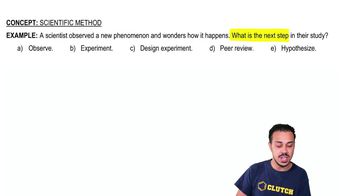
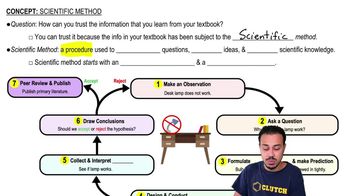
The scientific method is a process involving observation, question, hypothesis, prediction, experiment, and conclusion to test explanations scientifically.
A hypothesis is a proposed explanation tested by experiments, while a scientific theory is a broad concept supported by extensive evidence and close to proven true.
The independent variable is manipulated by the scientist; the dependent variable is the factor affected by the independent variable in an experiment.
A controlled experiment compares an experimental group receiving treatment to a control group that does not, to isolate the effect of the independent variable.
A placebo is a treatment without active medication; a double-blind trial means neither subjects nor scientists know group assignments to prevent bias.
The three domains are Bacteria (simple, single-celled), Archaea (similar to bacteria but genetically distinct), and Eukarya (complex cells with nuclei).
Eukarya includes Protists (mostly single-celled), Plantae (photosynthetic plants), Fungi (decomposers), and Animalia (organisms that eat others).
Scientific names use binomial nomenclature: the genus (capitalized) followed by the species (lowercase), both italicized or underlined.
From largest to smallest: Biosphere, Ecosystem, Community, Population, Organism, Organ and organ system, Tissue, Cell, Organelle, Molecule.
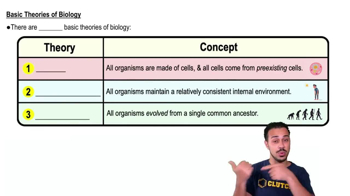
Evolution is the process of change over time that has transformed life, driven by natural selection where favorable traits increase survival and reproduction.
1. Individual variation exists in populations. 2. Overproduction of offspring leads to competition for resources.
Genetic information is encoded in DNA, which directs protein production through gene expression to build and maintain cells.
The genetic code is the universal chemical language of nucleotides that translates DNA sequences into proteins.
Cells detect external and internal stimuli via receptors, which alter protein activity or gene expression to respond appropriately.
Organisms with structures best suited to their functions are more likely to survive and reproduce, showing a direct link between structure and function.
Energy from the sun is captured by producers, transferred through consumers, and matter cycles through decomposers back to the environment.
Biological systems are combinations of components whose interactions create complex functions; disruptions can affect the entire system.
Taxonomy is the classification of organisms into hierarchical groups based on shared characteristics.
Artificial selection is human-directed breeding to modify organisms for desired traits, such as in genetic engineering.
Peer review ensures research quality by having experts evaluate studies before publication, allowing science to progress through communication and critique.