 Back
BackGeneral Biology Key Terms and Concepts
 09:26
09:26
Terms in this set (29)
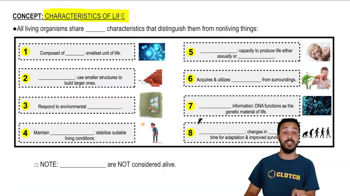
Homeostasis is the maintenance of a stable internal environment despite external changes.
A catalyst is a substance that speeds up a chemical reaction without being consumed.
A monosaccharide is a simple sugar, the basic unit of carbohydrates, e.g., glucose and fructose.
A disaccharide is a carbohydrate made of two monosaccharides linked by dehydration synthesis, e.g., maltose and lactose.
A polysaccharide is a complex carbohydrate made of many monosaccharides, e.g., starch and glycogen.
Dehydration synthesis joins monomers by removing water, forming covalent bonds in macromolecules.
Hydrolysis breaks bonds between monomers by adding water, used in digestion.
Saturated triglycerides have no double bonds and are solid at room temperature; unsaturated triglycerides have double bonds and are liquid.
Cell Theory states all living things are made of cells, cells are the basic unit of life, and all cells come from preexisting cells.
The plasma membrane is a fluid mosaic of lipids and proteins that controls substance movement in and out of the cell.
Diffusion is the passive movement of molecules from high to low concentration.
Facilitated diffusion uses transport proteins to move molecules down their concentration gradient without energy.
Osmosis is the diffusion of water across a selectively permeable membrane.
An isotonic solution has equal solute concentration inside and outside the cell, so no net water movement occurs.
A hypertonic solution has higher solute concentration outside the cell, causing water to leave the cell and shrink it.
A hypotonic solution has lower solute concentration outside the cell, causing water to enter and swell the cell.
Active transport moves molecules against their concentration gradient using energy (ATP).
Endocytosis is the process of engulfing substances into the cell by vesicle formation.
Exocytosis is the process of vesicles fusing with the plasma membrane to release contents outside the cell.
Mitochondria are organelles that produce ATP through cellular respiration.
Ribosomes are organelles that synthesize proteins by translating mRNA.
The Golgi apparatus modifies, sorts, and packages proteins and lipids for transport.
Lysosomes contain enzymes that digest cellular waste and foreign material.
The cytoskeleton provides structural support and aids in cell movement and transport.
The pH scale measures acidity or alkalinity; 7 is neutral, below 7 acidic, above 7 basic.
A buffer stabilizes pH by absorbing or releasing hydrogen ions.
Organic molecules contain carbon and hydrogen, forming the basis of life’s macromolecules.
Phospholipids form the bilayer of cell membranes with hydrophilic heads and hydrophobic tails.
An enzyme is a protein that acts as a biological catalyst to speed up reactions.