 Back
General Biology: Meiosis
 01:43

Terms in this set (20)
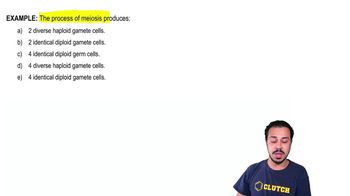
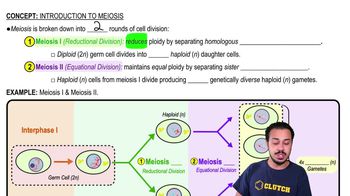
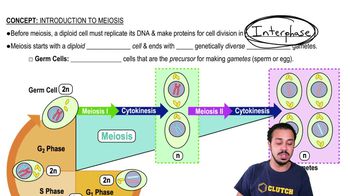
Meiosis is a type of cell division that reduces the chromosome number by half, producing four haploid cells from one diploid cell, essential for sexual reproduction.
Meiosis consists of two consecutive divisions: Meiosis I and Meiosis II.
Homologous chromosomes pair up and exchange segments in a process called crossing over, increasing genetic variation.
Homologous chromosomes are pairs of chromosomes, one from each parent, that are similar in shape, size, and gene content.
Two haploid cells with duplicated chromosomes, each containing sister chromatids.
Homologous chromosomes are pulled to opposite poles, unlike sister chromatids in mitosis.
Sister chromatids separate and move to opposite poles, similar to mitosis.
Through crossing over and independent assortment of chromosomes, meiosis creates genetically unique gametes.
The random orientation of homologous chromosome pairs during Metaphase I, leading to different combinations of chromosomes in gametes.
Cells are haploid, containing one set of chromosomes.
Meiosis halves the chromosome number; mitosis maintains the chromosome number.
The pairing of homologous chromosomes during Prophase I of meiosis.
The synaptonemal complex facilitates pairing and recombination.
The visible site where crossing over has occurred between homologous chromosomes.
It produces haploid gametes that fuse to restore diploid chromosome number in offspring.
Chromosomes arrive at poles and the cell divides, forming two haploid cells.
Sister chromatids are identical copies joined at the centromere; homologous chromosomes are similar but not identical chromosomes from each parent.
Four genetically distinct haploid daughter cells.
Gametes are haploid (n), somatic cells are diploid (2n).
It increases genetic variation by exchanging DNA between homologous chromosomes.