 Back
General Biology: Organic Molecules and Macromolecules
 02:00

Terms in this set (22)
An organic compound is a molecule primarily made of carbon atoms bonded to hydrogen, oxygen, nitrogen, or other elements, forming the basis of life.
A hydrocarbon is an organic molecule consisting only of carbon and hydrogen atoms, often forming the backbone of many organic compounds.
Isomers are molecules with the same molecular formula but different structural arrangements, resulting in different properties.
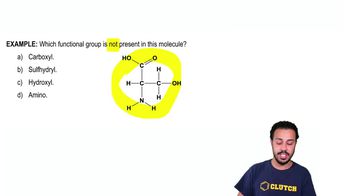
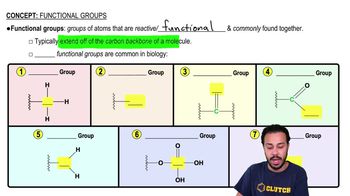
A functional group is a specific group of atoms within a molecule that determines its chemical properties and reactivity.
A monomer is a small molecule that can join others to form a polymer, which is a large molecule made of repeating monomer units.
A dehydration reaction joins monomers by removing a water molecule, forming a covalent bond between them.
Hydrolysis breaks polymers into monomers by adding a water molecule, breaking covalent bonds.
Monosaccharides are carbohydrate monomers; polymers include disaccharides and polysaccharides like starch, glycogen, and cellulose.
Starch stores energy in plants, glycogen stores energy in animals, and cellulose provides structural support in plant cell walls.
Lipids are hydrophobic molecules including fats, steroids, and phospholipids, characterized by their insolubility in water.
A triglyceride consists of one glycerol molecule bonded to three fatty acid chains.
Saturated fats have no double bonds and are solid at room temperature; unsaturated fats have one or more double bonds and are liquid.
Steroids are lipids with a carbon skeleton of four fused rings, important in cell signaling and structure.
Phospholipids have two fatty acids and a phosphate group attached to glycerol; they form cell membranes.
Proteins are polymers of amino acids linked by peptide bonds.
Denaturation is the loss of a protein's native structure due to environmental changes, affecting its function.
Peptide bonds are covalent bonds that link amino acids together in a protein chain.
Primary: amino acid sequence; secondary: alpha helices and beta sheets; tertiary: 3D folding; quaternary: multiple polypeptide chains.
Nucleic acids like DNA and RNA are polymers of nucleotides, each with a sugar, phosphate, and nitrogenous base.
The sugar and phosphate groups form the backbone of DNA strands.
Nitrogenous bases hydrogen bond with complementary bases to hold the two DNA strands together.
DNA contains the genetic code that is transcribed into RNA, which is then translated into proteins.