 Back
BackGeneral Biology Review Questions
 07:48
07:48
Terms in this set (29)
Microevolution is the change in allele frequencies within a population over time.
Macroevolution refers to large-scale evolutionary changes that result in the formation of new species or groups over long periods.
A species is a group of organisms that can interbreed and produce fertile offspring.
Allopatric speciation occurs when populations are geographically separated, leading to reproductive isolation and new species formation.
Sympatric speciation happens without geographic separation, often through genetic or behavioral barriers within the same area.
Reproductive barriers such as polyploidy, habitat differentiation, or sexual selection keep gene pools separated in sympatric speciation.
Prezygotic barriers prevent mating or fertilization. Types: temporal, habitat, behavioral, mechanical, and gametic isolation.
Postzygotic barriers occur after fertilization. Types: reduced hybrid viability, reduced hybrid fertility, and hybrid breakdown.
Ecology is the study of interactions between organisms and their environment.
Abiotic factors are nonliving environmental components like sunlight, temperature, water, soil, and wind.
Biotic factors are living components such as plants, animals, bacteria, fungi, and protists.
Levels: Organism (individual), Population (group of same species), Community (different species), Ecosystem (community + abiotic factors).
A habitat is the natural environment where an organism lives.
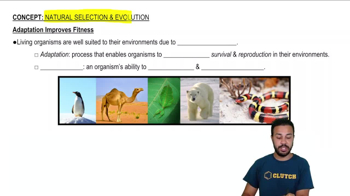
Adaptations: Behavioral, physiological, and structural changes.
Freshwater (low salinity) and marine (high salinity) are two aquatic biomes.
Wetlands are areas saturated with water, supporting aquatic plants and diverse wildlife.
Carrying capacity is the maximum population size an environment can sustain.
It states that two species competing for the same resources cannot coexist indefinitely.
A trophic level is a position in a food chain or web, defined by how an organism obtains energy.
Biological magnification is the increasing concentration of toxins in organisms at higher trophic levels.
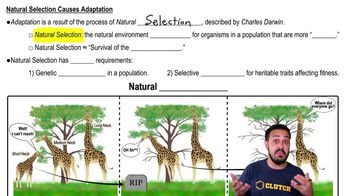
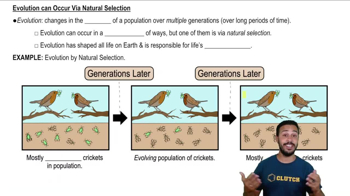
Natural selection is the process where organisms better adapted to their environment tend to survive and reproduce.
Homologous structures are anatomical features shared by species due to common ancestry, e.g., human arm and bat wing.
A mutation is a change in the DNA sequence that can introduce genetic variation.
Directional selection favors one extreme phenotype, shifting the population's trait distribution.
Stabilizing selection favors intermediate phenotypes, reducing variation.
Disruptive selection favors both extreme phenotypes, potentially leading to two distinct groups.
Population: group of same species; Community: interacting populations; Ecosystem: community + abiotic factors; Biosphere: all ecosystems on Earth.
An exponential growth curve shows rapid population increase with a J-shaped curve.
A food web is a complex network of feeding relationships among organisms in an ecosystem.