 Back
BackGeneral Biology: The Study of Life
 02:09
02:09

Terms in this set (20)
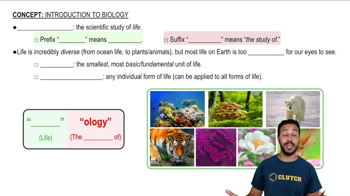
Biology is the study of life and living organisms, including their interactions with each other and their environments.
The scientific method is a research process involving defined steps such as making observations, forming hypotheses, conducting experiments, and analyzing results.
Inductive reasoning uses specific observations to arrive at a general conclusion, such as concluding all living organisms are made of cells based on observed examples.
Deductive reasoning uses general principles to predict specific outcomes, for example, predicting all dogs have kidneys because all mammals do.
Qualitative data are descriptive, while quantitative data are numerical measurements often organized in tables or graphs.
Peer review is a blind evaluation process where experts assess the validity and significance of scientific work before publication.
Primary literature is original research reviewed by experts; secondary literature includes summaries like books and review articles.
A scientific law describes a consistent relationship often expressed mathematically, while a scientific theory explains natural phenomena.
Basic science aims to expand knowledge without immediate application; technology applies scientific knowledge for practical purposes.
Properties include order, sensitivity to stimuli, reproduction, growth and development, regulation, homeostasis, and energy processing.
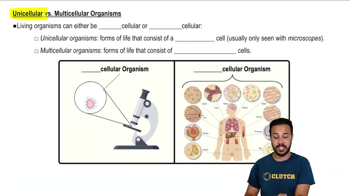
Order refers to the organized structure of living things, from cells to tissues, organs, and organ systems.
Atoms, molecules, macromolecules, organelles, cells, tissues, organs, organ systems, organisms, populations, communities, ecosystems, biosphere.
Organisms detect and react to environmental changes, such as the sensitive plant folding its leaves when touched.
Cycling of nutrients and energy transfer and transformation (flow of energy from sunlight to producers to consumers).
The three domains are Bacteria, Archaea (both prokaryotic), and Eukarya (eukaryotic organisms).
Prokaryotic cells lack a nucleus and membrane-bound organelles; eukaryotic cells have a nucleus and organelles.
Domain Eukarya includes the multicellular kingdoms Plantae, Fungi, and Animalia, plus various other eukaryotic groups.
Examples include physiology, genetics, ecology, botany, microbiology, and developmental biology.
Homeostasis is the regulation of internal conditions to maintain a stable, constant environment within an organism.
Organisms acquire and use energy to power cellular processes and maintain life functions.