Viruses are non-cellular infectious agents composed of genetic material (DNA or RNA) surrounded by a protein coat called a capsid.
How do viruses replicate?
Viruses rely entirely on host cells for replication, using either the lytic cycle (causing cell lysis) or the lysogenic cycle (viral DNA integrates into host genome and remains dormant).
Describe the lytic cycle of viral replication.
Virus injects genome into host, hijacks host machinery to produce new viruses, assembles them, and causes host cell lysis to release new viruses.
What is the lysogenic cycle?
Viral DNA integrates into the host genome and replicates with it, remaining dormant until triggered to enter the lytic cycle.
What enzyme do retroviruses use to integrate into host DNA?
Retroviruses use reverse transcriptase to synthesize DNA from an RNA template, allowing integration into the host genome.
What are prions?
Prions are infectious protein particles that cause neurodegenerative diseases by inducing abnormal folding of normal proteins.
How do viruses spread in plants and animals?
Viruses spread via direct contact, airborne droplets, vectors (insects), or contaminated surfaces; in plants often through wounds or insect vectors, in animals via respiratory routes, bodily fluids, or vectors.
What is a bacteriophage?
A bacteriophage (phage) is a virus that infects bacteria, often with a complex structure including a head, tail, and tail fibers.
What are the main shapes of bacteria?
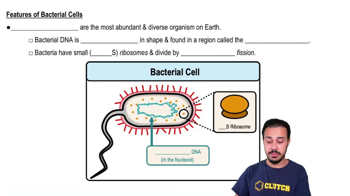
Bacteria can be spherical (cocci), rod-shaped (bacilli), or spiral (spirilla).
What is binary fission?
Binary fission is the main asexual reproduction method in bacteria, producing two identical daughter cells.
Name three methods bacteria use for genetic exchange.
Bacteria exchange genetic material via transformation (uptake of free DNA), transduction (DNA transfer by phages), and conjugation (direct transfer via F factor plasmid).
What is the F factor in bacteria?
The F factor is a plasmid that enables bacterial conjugation, allowing transfer of genetic material between cells.
What distinguishes archaea from bacteria?
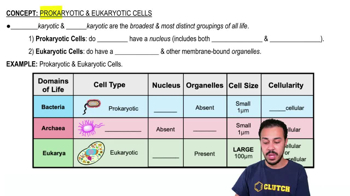
Archaea are prokaryotes distinct from bacteria, often living in extreme environments like high salt or temperature.
What is the endosymbiotic theory?
Endosymbiosis explains the origin of eukaryotic organelles like mitochondria and chloroplasts from symbiotic prokaryotes, supported by double membranes and their own DNA.
Define convergent evolution.
Convergent evolution occurs when unrelated organisms independently evolve similar traits due to similar environmental pressures.
Difference between analogous and homologous structures?
Analogous structures have similar function but different evolutionary origins; homologous structures have similar origins but may have different functions.
What are paralogous genes?
Paralogous genes are genes related by duplication within a genome that may evolve new functions.
What is phylogeny?
Phylogeny is the evolutionary history and relationships among species, often shown as a phylogenetic tree.
What key features characterize bacteria?
Bacteria are unicellular prokaryotes with a cell wall made of peptidoglycan, plasma membrane, cytoplasm, ribosomes, nucleoid, and sometimes flagella or pili.
How do viruses evade the immune system during latency?
Some viruses remain dormant within host cells (latency), reactivating under certain conditions to evade immune detection and persist.
 Back
Back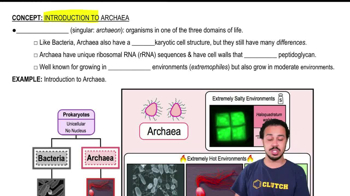
 04:39
04:39