 Back
BackGeneral Biology:CH32 Animal Diversity and Evolution
You can tap to flip the card.
Control buttons has been changed to "navigation" mode.
1/7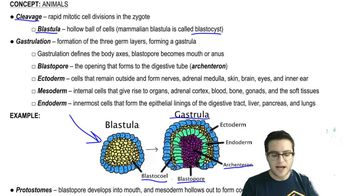
 06:59
06:59
Terms in this set (7)
Coelomates have a true coelom from mesoderm; hemocoel animals have a body cavity and acoelomates lack a body cavity.
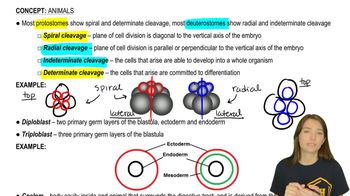
Protostomes have spiral, determinate cleavage; blastopore becomes mouth. Deuterostomes have radial, indeterminate cleavage; blastopore becomes anus.
Bilateral symmetry means having distinct left and right sides, dorsal and ventral surfaces, and anterior and posterior ends.
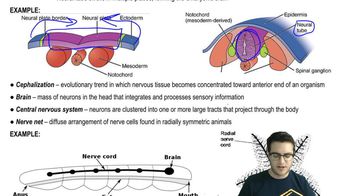
An evolutionary trend toward concentration of nervous and sensory organs, such as a brain.
Connective tissue, epithelial tissue, muscle tissue, and nervous tissue.