 Back
BackMacromolecules
 03:08
03:08
Terms in this set (116)
what is a polymer
monomers linked together
what are monomers
single unit
what are macromolecules
large molecules built from monomers
what are the three kinds of macromolecules
carbohydrates, proteins, and nucleic acids
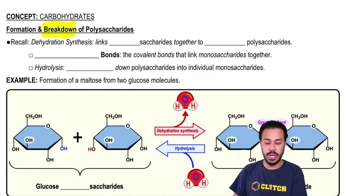
explain dehydration reaction
h2o molecule is removed
explain hydrolysis
opposite of dehydration reaction
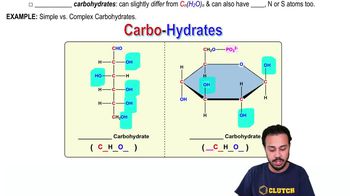
what is the simplest form of a carbohydrate
monosaccharide
what is a monosaccharide
simplest carbohydrates or sugar unit
what is a polysaccharide
large polymers made of many monosaccharide units joined together
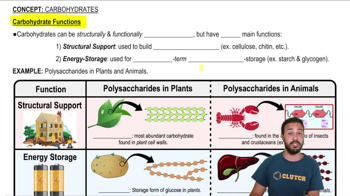
what are the two functions of carbohydrates
store energy and provide structure/ support to cells and organisms
what is molecular diversity caused from
number of carbons in the carbon skeleton, location of the C=O bond, different arrangements of atoms
what is the most common monosaccharide
glucose
what type of rights form in aqueous solutions for carbohydrates
5 and 6 carbon rings
why do carbohydrates contain substantial chemical potential energy
the bonds that hold the monomers together
what uses starch
plants
what do plants use starch for
storing energy
what is a type of starch
amylose
what is amylose
it is a glucose polymer of starch that is unbranched
what is a polysaccharide storage in animals
glycogen
what is a polysaccharide for energy for plants
starch
what is glycogen
energy storage for plants that is highly branch
what is important about glycogen being highly branched
it provides multiple cites where glucose can be removed to allow quick energy when needed
where is glycogen stored
human liver and muscle cells
what are the two ring forms glucose has
a and B
what type of ring form does Amylose have
alpha (a)
what type of ring form does cellulose have
beta (B)
how is Amylose alpha (a) positioned in ring form
the OH groups are located on the bottom
how is Cellulose beta (B) positioned in ring form
the OH groups are every other from the top and bottom
what does cellulose do
is a major component of plant cells walls
what holds the hydroxyl groups together
because the cellulose molecules are not branched, they are able to be held together through hydrogen bonds of Hydroxyl groups to form strong fibers
what does Chitin do
provides structure in animals and fungi
how is Chitin different than cellulose
the sugar monomers in Chitin have a nitrogen-containing group rather than a hydroxyl group
___ are one the one class of large biological molecules that does not include try polymers
lipids
are lipids hydrophobic or hydrophilic
hydrophobic
why are lipids hydrophobic
they contain large regions of hydrocarbon with nonpolar covalent bonds
what are the functions of lipids
membrane formation, energy storage, and communication (hormones)
what are triglycerides
fats
how are triglycerides assembled (composed of)
four smaller molecules: one glycerol and three fatty acids
how are fatty acids kinked together
dehydration reaction
what are the two main kinds of fatty acids
saturated and unsaturated
describe saturated fatty acids
have max number of Hydrogen atoms that bond to SINGLE carbons. Take on the form of a solid because single C-C bonds pack tightly into solids
describe unsaturated fatty acids
have on or more double bonds. Take on a liquid form because the double bonds cause a kink allowing more movement
why do these fats have high chemical potential energy
the C-H bonds and cells can release this energy when fats are broken down
what two macromolecules have high chemical potential energy
carbohydrates and fats
what are phospholipids
type of lipid composed of two fatty acids and a phosphate containing head group that is attached to a central glycerol
which is hydrophobic and which is hydrophilic in a phospholipid
head: hydrophilic and the two tails are hydrophobic
when emersed in water what do phospholipids form
doubled layered sheets called bilayers
what doe a phospholipid bilayer do
forms a boundary between two aqueous environments and are the major structural component of cell membranes
steroids
lipids that consist of four fused rings
what is a type of steroid important in animals
cholesterol
what is a lipid that doesn't contain fatty acid tails
steroids
what is cholesterol
important steroid in animals and is a component of animal membranes
what do nucleic acids do
encode, store, ad help transmit genetic information in cells
what are the two types of nucleic acids
DNA and RNA
what are the monomers of nucleic acids
nucleotides
what are the three parts of a nucleotide
a pentose (5- carbon) sugar, a nitrogenous base, one or more phosphate groups
what is a chain of nucleotides called
polynucleotide
what bond holds nucleotides together
phosphodiester bonds
what does a phosphate group link in a nucleotide
the 3' hydroxyl group of one sugar to the 5' carbon of the next
how are nucleic acid sequences written
5' -> 3'
what is the sugar in DNA
deoxyribose
what is the sugar in RNA
ribose
with RNA having ribose sugar what does this mean regarding structure
it has an extra hydroxyl group
how many polynucleotide strands does DNA have
two
what bond holds the two polynucleotide strands together in DNA
hydrogen bonds
how many nucleotide strands does RNA have
one
what is a nitrogenous base
the ringed nitrogen containing groups that project away from the sugar in a nucleotide
what are the different types of nitrogenous bases
adenine, guanine, cytosine, thymine, and uracil
what are the two classes of nitrogenous bases
pyrimidines and purines
which nitrogenous bases are a part of the pyrimidines
cytosine, thymine and uracil
which nitrogenous bases are part of the purines
adenine and guanine
which direction does DNA run in
5' -> 3' and antiparallel arrangement
what are base pairs
the two nitrogenous bases on opposite DNA strands formed from hydrogen bonds
what is the specific pattern of base pairing
complementary base pairing
what is a gene
a sequence of NDA that contains information for a making a function product protein or RNA)
how is the base sequence of a gene written
5' -> 3'
what is gene expression
the process by which the information in a gene is used to produce a functional product
what is the central dogma
the flow of genetic information in a cell
describe the flow of information for making a protein
DNA stores the genetic information in the baes sequence of genes, RNA carries the genetic information from DNA to ribose to make proteins, the information in RNA is used to make a specific protein
___ determines the characteristics and function of a cell
proteins
what do proteins do
they are the worker molecule in a cell that carry out many of the essential functions
why can proteins perform a high range of functions
they assume a great variety of shapes and structures
what do enzymatic proteins do
speed up specific chemical reactions
what do defensive proteins do
protection against pathogens
what do storage proteins do
store amino acids for later use
what do transport proteins do
transport substances within or between cells
what do hormonal proteins do
coordinate activities of cells and tissues
what do receptor proteins do
detect chemical signals and trigger cellular responses
what do contractile and motor proteins do
produce or control movement
what do structural proteins do
provide structural support and strength
what do proteins in a cell do
determine its structure and function
what do red blood cells do
carry oxygen from your lungs to the rest of your body
what do white blood cells
fight and destroy illness in the body
what are the monomers of proteins
amino acids
what are the polymers of proteins
polypeptides
what is the structure of an amino acid (different groups)
R group, amino group, and carboxyl group, with central (a) carbon atom
what bond connects amino acids
polypeptide bond
what are the two ends in amino acid
amino end (N- terminus) and Carboxyl (C- terminus)
what does a proteins function depend on
its 3-D structure
in proteins ____ determins ____
structure determines function
what are the four levels of structure in proteins
primary, secondary, tertiary, and quaternary
what is the primary structure in proteins
the sequence of amino acids joined by peptide bonds
what is the secondary structure in proteins
the polypeptide backbone forms repeating patterns forming two common structures (a helix and B pleated sheet)
what are the two common secondary structures
a helix and B pleated sheet
what is the a helix in the secondary structure
the backbone coils into a spiral
what is the B pleated sheet in the secondary structure
the backbone folds back and forth into a sheet
what bond holds the two common secondary structures together
hydrogen bonds
what do the two common secondary structures result from
hydrogen bonds between atoms in the polypeptide backbone
what is the tertiary structure
the 3D shape resulting from interactions among the R groups of its amino acids as well as interactions with water
in tertiary structure how do the hydrophobic R groups tend to react with water
cluster in the interior away from water
in tertiary structure how do the hydrophilic R groups tend to react with water
tend to be exposed on the surface where they can interact with water
what causes the polypeptide to fold into specific 3D shape
interactions among R groups
what is quaternary structure
protein subunits assemble to form a single functional protein
in protein how are subunits held together by
non- covalent interactions such as hydrogen bonds, ionic attractions, hydrophobic interactions, and van der Walls interactions
what is a subunit
functional proteins consisting of two or more polypeptide chains
do proteins made of a single polypeptide chain have a quaternary structure
no