 Back
BackMendelian Genetics and Probability in Inheritance
 02:09
02:09
Terms in this set (20)
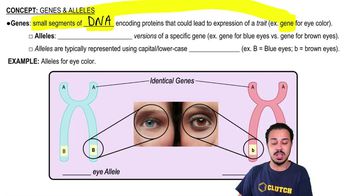
A gene is a discrete heritable unit that determines a specific characteristic in an organism.
Alleles are alternative versions of a gene that account for variations in inherited characters.
The locus is the specific physical location of a gene on a chromosome.
The two alleles for a heritable character separate during gamete formation, so each gamete carries only one allele.
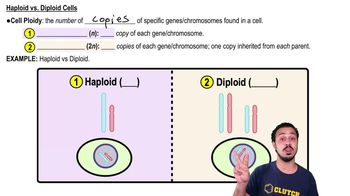
Homozygous means having two identical alleles; heterozygous means having two different alleles for a gene.
Genotype is the genetic makeup of an organism; phenotype is the observable traits or appearance.
A testcross is a cross between an organism with an unknown genotype and a homozygous recessive organism to determine the unknown genotype.
Allele pairs for different genes segregate independently during gamete formation, applying to genes on different chromosomes or far apart on the same chromosome.
The typical phenotypic ratio is 3:1 dominant to recessive traits in the F2 generation.
The phenotypic ratio is 9:3:3:1 for the four possible trait combinations in the F2 generation.
A Punnett square predicts the allele composition and genotype ratios of offspring from parents with known genotypes.
The blending hypothesis suggests genetic material blends in offspring, but Mendel showed inheritance is particulate with discrete units (genes).
The particulate hypothesis states that genes are discrete units passed unchanged from parents to offspring.
The dominant allele determines the organism's appearance when present, masking the recessive allele.
The recessive allele has no noticeable effect on appearance when paired with a dominant allele.
Pea plants are easy to grow, have true-breeding strains, controlled mating, short generation time, and distinct traits with two forms.
The 3:1 ratio in the F2 generation supports the existence of dominant and recessive alleles and segregation of alleles.
Use the multiplication rule: multiply the probabilities of each independent event occurring together.
Use the addition rule: add the probabilities of each mutually exclusive event occurring.
Larger sample sizes yield results closer to predicted ratios, increasing the reliability of genetic conclusions.