 Back
BackPhotosynthesis - General Biology
 03:32
03:32
Terms in this set (20)
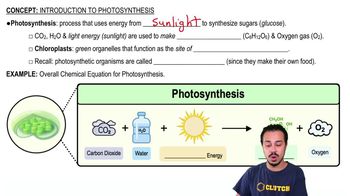
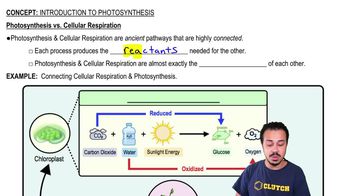
Photosynthesis is the process by which green plants, algae, and some bacteria convert light energy into chemical energy stored in glucose.
Photosynthesis occurs in the chloroplasts of plant cells, specifically within the thylakoid membranes and stroma.
The two main stages are the light-dependent reactions and the Calvin cycle (light-independent reactions).
Chlorophyll is the primary pigment that absorbs light energy for photosynthesis.
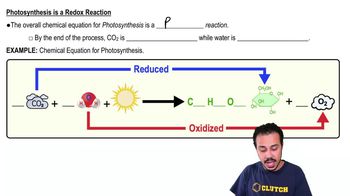
6 CO2 + 6 H2O + light energy → C6H12O6 + 6 O2
Light energy is captured by chlorophyll and used to produce ATP and NADPH, while water is split to release oxygen.
Photolysis is the splitting of water molecules into oxygen, protons, and electrons during the light-dependent reactions.
ATP and NADPH provide the energy and reducing power needed for the Calvin cycle to synthesize glucose.
The Calvin cycle occurs in the stroma of the chloroplast.
The phases are carbon fixation, reduction, and regeneration of the CO2 acceptor.
Rubisco catalyzes the fixation of CO2 to ribulose bisphosphate (RuBP).
The first stable product is 3-phosphoglycerate (3-PGA).
Glucose is synthesized from G3P molecules produced in the Calvin cycle, which are combined to form sugars.
Photosynthesis produces oxygen and organic molecules that serve as energy sources for most living organisms.
Light intensity, carbon dioxide concentration, temperature, and water availability affect photosynthesis rate.
The thylakoid membrane houses the photosystems and electron transport chain for light-dependent reactions.
Photosystems are protein-pigment complexes that capture light energy and drive electron transport.
Photosystem II absorbs light first and splits water; Photosystem I absorbs light later to produce NADPH.
Cyclic electron flow recycles electrons to produce additional ATP without producing NADPH or oxygen.
Plants use cyclic electron flow to produce extra ATP when the Calvin cycle requires more ATP than NADPH.