 Back
BackWeek 9 lecture 3 1st half
 04:32
04:32
Terms in this set (20)
Conservation Biology is a scientific discipline that studies threats to biodiversity and how to mitigate them.
The goal is to maintain diversity of genes, populations, species, habitats, communities, ecosystems, landscapes, and the processes occurring at each level.
It is interdisciplinary, integrating biological, physical, social sciences, economics, and natural-resource management techniques.
Population biology, taxonomy, ecology, genetics, zoos, aquaria, botanical gardens, ecosystems, law, policy, ethics, and economics.
Multi-disciplinary, applied, mission-driven, crisis-oriented, policy-connected, and continually ongoing.
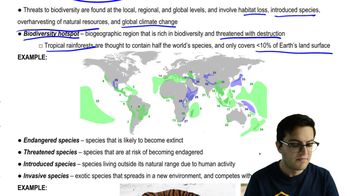
Due to increasing demands and pressure on the world’s ecosystems and the human population explosion.
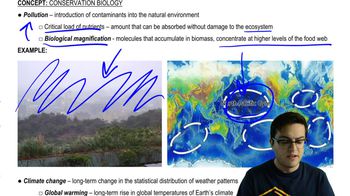
Use of pesticides and agricultural chemicals that can harm ecosystems and biodiversity.
It illustrates the impact of pollution or environmental degradation causing mass mortality in aquatic life.
Human population size has increased exponentially, especially after the Industrial Revolution.
Agricultural revolution, metalworking, plowing and irrigation, Industrial Revolution, and disease outbreaks like the Bubonic plague.
By studying threats scientifically and developing strategies to mitigate them across multiple levels of biological organization.
They serve as conservation centers for species preservation, education, and research.
It means the field often responds urgently to immediate threats to biodiversity and ecosystems.
Conservation Biology informs and influences laws and policies to protect biodiversity and natural resources.
Processes like nutrient cycling and energy flow are essential for ecosystem health and biodiversity maintenance.
Because it aims to actively conserve biodiversity and prevent species extinctions.
It increases resource demand and habitat destruction, leading to biodiversity loss.
To understand genetic diversity and manage populations for long-term survival.
Taxonomy helps identify and classify species, which is critical for conservation prioritization.
It involves collaboration across various scientific and social fields to address complex conservation issues.