 Back
BackHuman Reproduction and Development: Gametogenesis, Fertilization, and Birth
Study Guide - Smart Notes
 Tailored notes based on your materials, expanded with key definitions, examples, and context.
Gametogenesis: Formation of Gametes
Spermatogenesis
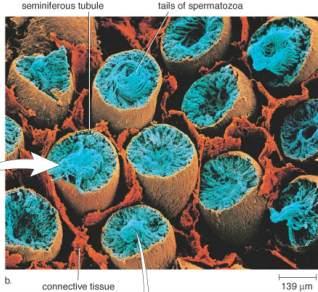
Spermatogenesis is the process by which sperm cells are produced in the seminiferous tubules of the testes. This process involves several specialized cell types and is essential for male fertility.
Sertoli Cells: These cells support and nourish developing sperm cells and form the blood-testis barrier, which protects germ cells from harmful substances.
Leydig Cells: Located in the interstitial tissue between seminiferous tubules, Leydig cells produce testosterone, which is crucial for the development of male secondary sexual characteristics and the regulation of spermatogenesis.
Seminiferous Tubules: The site of sperm production, lined with germ cells at various stages of development.
Sperm Structure
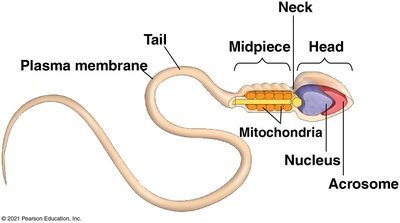
Sperm cells are highly specialized for motility and fertilization. Each part of the sperm has a distinct function:
Head: Contains the nucleus (with paternal DNA) and is capped by the acrosome, which contains enzymes necessary for penetrating the egg.
Midpiece: Packed with mitochondria that provide ATP for movement.
Tail (Flagellum): Propels the sperm toward the egg.
Oogenesis
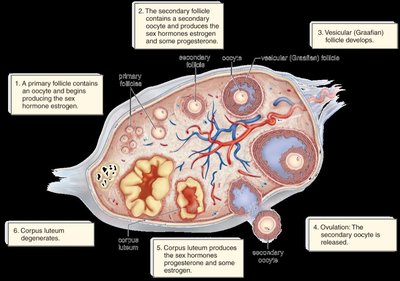
Oogenesis is the process by which ova (egg cells) are produced in the ovaries. It involves the formation of primary oocytes before birth, which then mature during the reproductive years.
Zona Pellucida (ZP): A glycoprotein layer surrounding the oocyte, important for sperm binding during fertilization.
Polar Body (PB): A small cell produced during meiosis that typically degenerates; ensures most cytoplasm remains in the oocyte.
Nucleus (N): Contains the maternal genetic material.
Human Reproductive Anatomy
Male Reproductive System
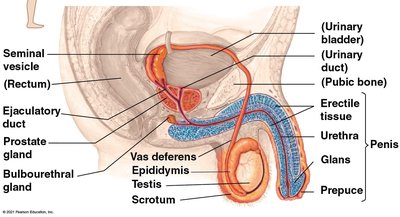
The male reproductive system is specialized for the production, maturation, and delivery of sperm.
Testis: Site of spermatogenesis.
Epididymis: Stores and matures sperm.
Vas Deferens: Transports sperm from the epididymis to the urethra.
Accessory Glands (Seminal Vesicle, Prostate, Bulbourethral): Produce seminal fluid that nourishes and protects sperm.
Penis: Organ for sperm delivery.
Female Reproductive System
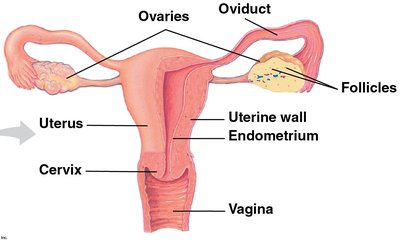
The female reproductive system is specialized for the production of ova, reception of sperm, and support of embryonic development.
Ovaries: Produce eggs and hormones (estrogen, progesterone).
Oviducts (Fallopian Tubes): Site of fertilization; transport eggs to the uterus.
Uterus: Site of embryo implantation and development.
Cervix: Lower part of the uterus, opens into the vagina.
Vagina: Receives sperm and serves as the birth canal.
Journey of the Gametes and Fertilization
Pathway of Sperm and Egg
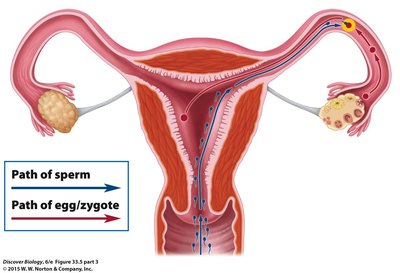
Fertilization in humans typically occurs in the oviduct (fallopian tube). Sperm must travel through the female reproductive tract to reach the egg.
Sperm Path: Vagina → Cervix → Uterus → Oviduct
Egg Path: Ovary → Oviduct (where fertilization occurs)
Fertilization
Fertilization is the fusion of a sperm and an oocyte to form a zygote. This process restores the diploid chromosome number and initiates embryonic development.
Location: Occurs in the oviduct (fallopian tube).
Key Steps: Sperm penetrates the zona pellucida, fuses with the oocyte membrane, and the nuclei combine.
Human Embryonic and Fetal Development
Embryonic Development
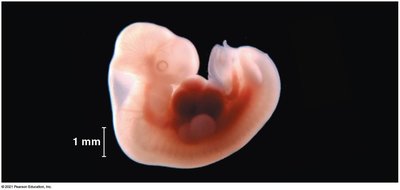
After fertilization, the zygote undergoes rapid cell division and differentiation, forming an embryo. Major organs and body structures begin to develop during the embryonic period (first 8 weeks).
Fetal Development
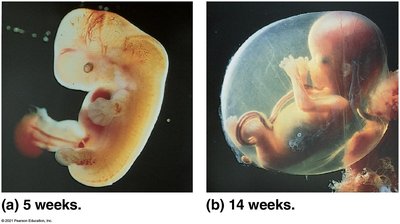
The fetal period extends from the 9th week until birth. During this time, growth and maturation of tissues and organs occur.
First Trimester: Major organ systems form; embryo becomes a fetus.
Second Trimester: Continued growth; movement felt by mother.
Third Trimester: Rapid growth; organs mature in preparation for birth.
Parturition (Childbirth)
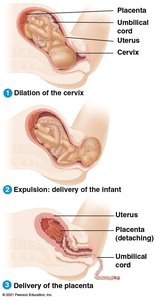
Stages of Labor
Parturition is the process of giving birth, involving coordinated uterine contractions and hormonal regulation.
Dilation: Cervix dilates to allow passage of the baby (full dilation is about 10 cm).
Expulsion: Delivery of the infant through the birth canal.
Placental Stage: Delivery of the placenta after the baby is born.
Key Terms and Concepts in Childbirth
Prostaglandin: Hormone-like substances that stimulate uterine contractions.
Oxytocin: Hormone released from the posterior pituitary that intensifies uterine contractions during labor.
"Water Breaking": Rupture of the amniotic sac, releasing amniotic fluid.
Full Dilation: Cervix opens to approximately 10 cm.
Fetal Skull Bones: Overlap (molding) to facilitate passage through the birth canal.
Crowning: When the baby's head becomes visible at the vaginal opening.
Final Stage of Labor: Delivery of the placenta (afterbirth).
Summary Table: Comparison of Spermatogenesis and Oogenesis
Feature | Spermatogenesis | Oogenesis |
|---|---|---|
Location | Seminiferous tubules (testes) | Ovaries |
Timing | Continuous from puberty | Begins before birth, resumes at puberty |
Number of Gametes Produced | Millions per day | One per cycle |
Completion of Meiosis | At time of sperm release | At fertilization |
Additional info:
Meiosis produces gametes by reducing the chromosome number by half, ensuring genetic diversity through crossing over and independent assortment.
Maternal immune tolerance is crucial for preventing rejection of the embryo/fetus as foreign tissue.
