 Back
Optimization Problems in Business Calculus: Applications of the Derivative
Study Guide - Smart Notes
 Tailored notes based on your materials, expanded with key definitions, examples, and context.
Optimization Problems
Introduction to Optimization
Optimization is a fundamental application of the derivative in calculus, especially relevant in business and economics. It involves finding the maximum or minimum values of a function, which correspond to optimal solutions for real-world problems such as maximizing profit, minimizing cost, or maximizing area.
Optimization means determining the best (maximum or minimum) value of a quantity under given constraints.
Common business applications include maximizing profit, minimizing production costs, and optimizing resource allocation.
Examples: Scheduling flights for maximum profit, minimizing drug dosage for desired response, minimizing maintenance costs, maximizing fenced area with minimum material.
Key Steps in Solving Optimization Problems
Solving optimization problems typically follows a structured approach:
Draw a picture if possible to visualize the problem.
Identify the quantity to be maximized or minimized (objective).
Write out the given information and constraints.
Formulate the objective equation (what you are optimizing).
Formulate the constraint equation (restrictions or limitations).
Solve for one variable using the constraint and substitute into the objective equation.
Take the first derivative of the objective equation and set it to zero to find critical points.
Use the second derivative test to determine if the critical point is a maximum or minimum.
Applications of Optimization
Finding Minimum or Maximum Values
To find the lowest or highest point of a function, set the derivative equal to zero and solve for the variable. This identifies critical points, which are then tested for maxima or minima using the second derivative.
Example: Suppose a ball is thrown straight up and its height after t seconds is given by . To find the time when the ball reaches its maximum height, set the derivative to zero:
seconds
Maximum height: feet
Maximizing Area with Constraints
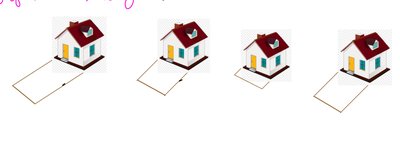
Optimization is often used to maximize the area of a region given a fixed perimeter or fencing material. For example, planting a rectangular garden along one side of a house with fencing on the other three sides.
Objective: Maximize area
Constraint: Total fencing feet (for example)
Solve for one variable:
Substitute into area:
Take derivative:
Set to zero:
Dimensions:
Maximum area: square feet
Minimizing Cost with Multiple Materials
Optimization can also minimize costs when different materials are used for construction. For example, building a rectangular enclosure with three sides of redwood fencing and one side of cement blocks.
Objective: Minimize total cost
Constraint: Area square feet
Solve for one variable:
Substitute into cost:
Take derivative:
Set to zero and solve for :
feet
feet
Minimum cost occurs at these dimensions.
Maximizing Volume with Material Constraints
Another common optimization problem is maximizing the volume of a structure given a fixed amount of material. For example, a canvas wind shelter for the beach with a back, two sides, and a top.
Objective: Maximize volume
Constraint: Total canvas feet
Solve for one variable and substitute into volume equation.
Find critical points by taking the derivative and setting it to zero.
Maximum volume occurs at the optimal dimensions.
Example: Maximum volume is 128 ft3 when ft and ft.
Summary Table: Optimization Problem Types
Problem Type | Objective | Constraint | Method |
|---|---|---|---|
Maximize Area | Area formula (e.g., ) | Perimeter or fencing length | Substitute constraint, differentiate, solve |
Minimize Cost | Cost formula (e.g., ) | Area or volume requirement | Substitute constraint, differentiate, solve |
Maximize Volume | Volume formula (e.g., ) | Material constraint | Substitute constraint, differentiate, solve |
Conclusion
Optimization problems are a central application of the derivative in business calculus. By following a systematic approach—identifying objectives and constraints, using derivatives to find critical points, and applying the second derivative test—students can solve a wide range of practical problems involving maximization and minimization.
