Back
Chapter 4: Introduction to Probability – Business Statistics Study Notes
Study Guide - Smart Notes
 Tailored notes based on your materials, expanded with key definitions, examples, and context.
Probability Concepts
Definition and Importance
Probability is a numerical value between 0 and 1 that represents the likelihood of a specific event occurring. In business statistics, probability helps quantify uncertainty and supports decision-making under risk.
Probability of 0: Event will not occur.
Probability of 1: Event will certainly occur.
Key Terms
Experiment: A process of measuring or observing an activity to collect data (e.g., rolling a die).
Sample Space: The set of all possible outcomes of an experiment.
Event: One or more outcomes from the sample space; a subset of the sample space.
Simple Event: An event with a single outcome that cannot be further simplified.
Sample Space Example
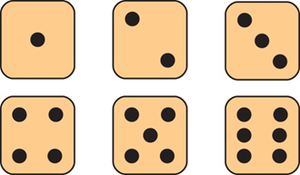
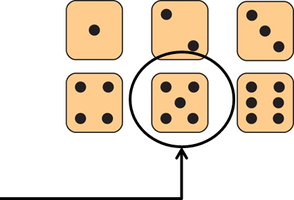
Rolling a single six-sided die: Sample space = {1, 2, 3, 4, 5, 6}
Methods of Assigning Probability
Overview
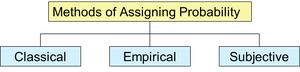
There are three primary methods for assigning probability: classical, empirical, and subjective.
Classical: Based on known outcomes and theoretical reasoning.
Empirical: Based on observed frequencies from experiments or historical data.
Subjective: Based on intuition, experience, or expert judgment when data is unavailable.
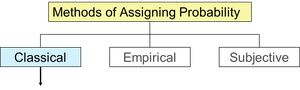
Classical Probability
Classical probability is used when all outcomes are equally likely and known.
Formula:
Example: Probability of rolling a five with a die:
Empirical Probability
Empirical probability is determined by conducting experiments and observing frequencies.
Formula:
Example: Probability that a graduate owes $5,000–$9,999 in student loans based on survey data.
Subjective Probability
Subjective probability is used when neither classical nor empirical methods are feasible. It relies on personal judgment or expert opinion.
Example: Estimating the probability that inflation will exceed 4% next year.
Basic Properties and Rules of Probability
Probability Rules
Rule 1: If , event A will certainly occur.
Rule 2: If , event A will not occur.
Rule 3: for any event A.
Rule 4: The sum of probabilities for all simple events in the sample space equals 1.
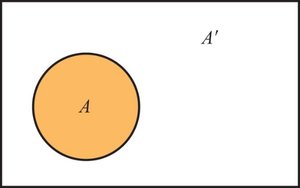
Rule 5 (Complement Rule): The probability of the complement of event A is .
Probability Rules for More Than One Event
Contingency Tables
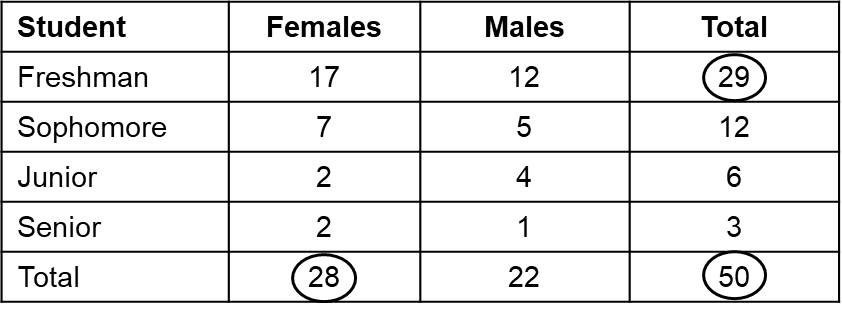
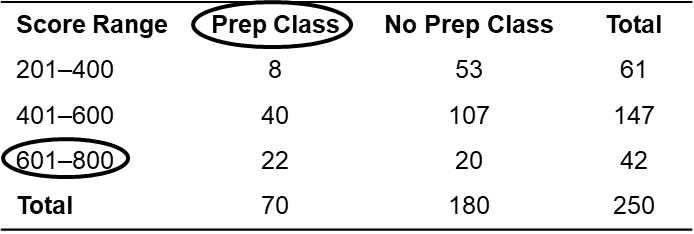
Contingency tables display the frequency of occurrences for two categorical variables and are used to calculate probabilities for combinations of events.
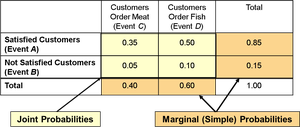
Marginal Probability: Probability of a single event, found in the margins (totals) of the table.
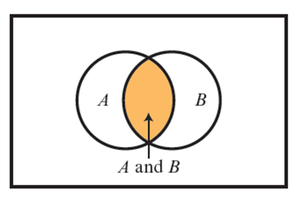
Intersection of Events (Joint Probability)
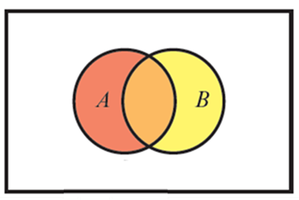
The intersection of two events (A and B) is the probability that both occur simultaneously.
Joint Probability:
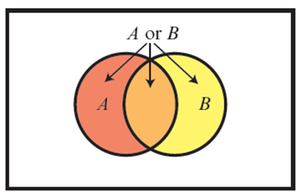
Union of Events
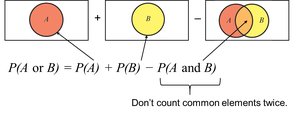
The union of two events (A or B) is the probability that at least one occurs.
Union Probability:
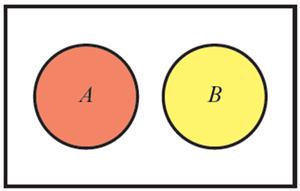
Addition Rule
Mutually Exclusive Events: Events that cannot occur at the same time.
Not Mutually Exclusive:
Contingency Table Example
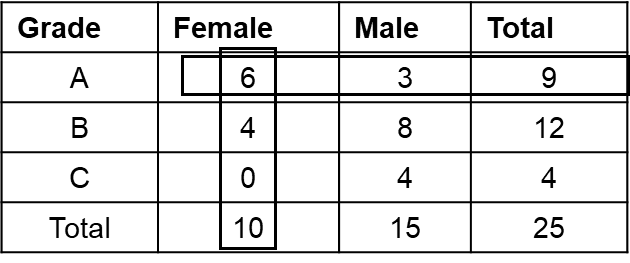
Calculate probability that a student earned an A or is female using a contingency table.
Conditional Probability
Definition and Calculation
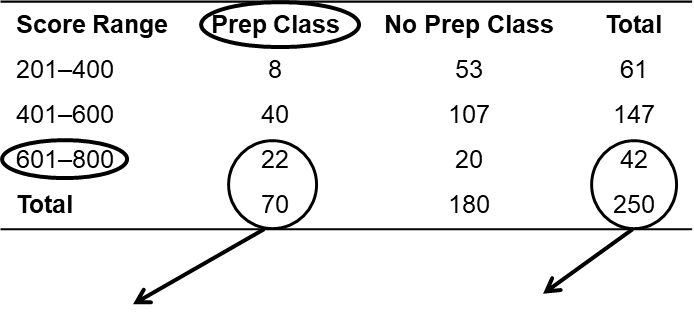
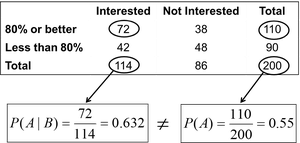
Conditional probability is the probability of event A occurring given that event B has occurred.
Formula:
Prior Probability: Determined without additional information.
Posterior Probability: Revised probability using new information.
Independent and Dependent Events
Definitions
Independent Events: Occurrence of one event does not affect the other.
Dependent Events: Occurrence of one event affects the probability of the other.
Testing Independence
Events A and B are independent if .
Multiplication Rule
Dependent Events
Formula:
Independent Events
Formula:
For multiple independent events:
Contingency Tables with Probabilities
Converting Frequencies to Probabilities
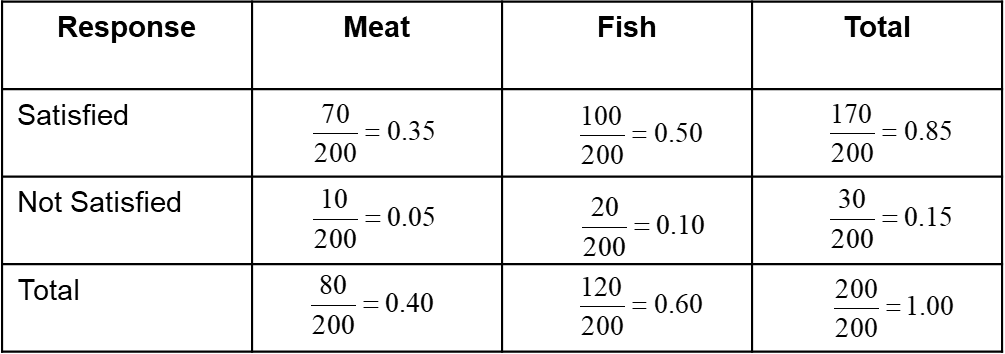
Divide each frequency by the total number of observations to obtain probabilities.
Response | Meat | Fish | Total |
|---|---|---|---|
Satisfied | 70/200 = 0.35 | 100/200 = 0.50 | 170/200 = 0.85 |
Not Satisfied | 10/200 = 0.05 | 20/200 = 0.10 | 30/200 = 0.15 |
Total | 80/200 = 0.40 | 120/200 = 0.60 | 200/200 = 1.00 |
Mutually Exclusive and Independent Events
Comparison
Mutually Exclusive: Cannot occur at the same time; always dependent.
Independent: Can occur together; occurrence of one does not affect the other.
Bayes’ Theorem
Definition and Formula
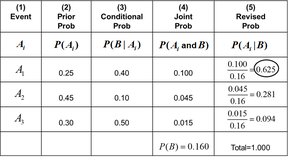
Bayes’ Theorem is used to update probabilities based on new information.
Formula:
Prior Probability: Initial probability before new information.
Conditional Probability: Probability of B given A.
Joint Probability: Probability of both A and B.
Revised Probability: Updated probability after considering B.
Counting Principles
Fundamental Counting Principle
If there are choices for the first event, for the second, and so on, the total number of possible outcomes is
Permutations
Definition: Number of ways to arrange objects in order.
Formula:
Combinations
Definition: Number of ways to select objects without regard to order.
Formula:
Use permutations when order matters; combinations when order does not matter.
Summary Table: Methods of Assigning Probability
Method | Basis | Example |
|---|---|---|
Classical | Theoretical, equally likely outcomes | Rolling a die |
Empirical | Observed frequencies | Survey results |
Subjective | Expert judgment | Forecasting inflation |
Next Chapter Preview
Discrete Probability Distributions
Will cover binomial and other discrete distributions.