 Back
BackArea, Finite Sums, and the Definite Integral
Study Guide - Smart Notes
 Tailored notes based on your materials, expanded with key definitions, examples, and context.
Section 5.1: Area and Estimating with Finite Sums
Basic Area Formulas
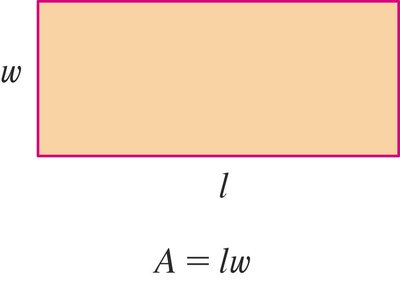
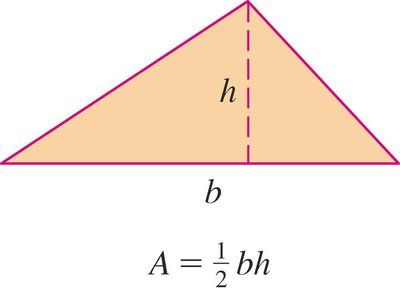
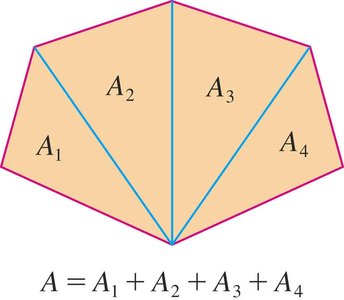
Understanding the area of basic geometric shapes is foundational for calculus, as it leads to the concept of integration. The area of more complex regions can often be approximated by decomposing them into simpler shapes.
Rectangle: The area is the product of its length and width.
Triangle: The area is half the product of its base and height.
Polygon: The area can be found by dividing the polygon into triangles and summing their areas.
Estimating Area Under Curves
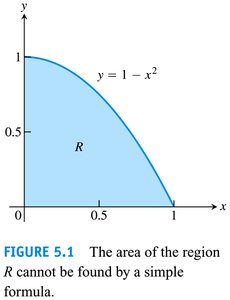
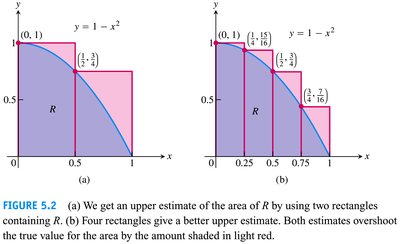
For regions bounded by curves, such as the area under y = 1 - x^2, there is no simple geometric formula. Instead, we approximate the area using rectangles, a process that leads to the concept of the definite integral.
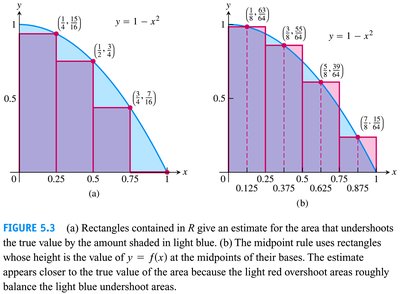
Upper and Lower Estimates: By inscribing or circumscribing rectangles under or over the curve, we obtain lower and upper bounds for the area.
Increasing Accuracy: Using more rectangles (subintervals) improves the approximation.
Finite Approximations and Sums
As the number of rectangles increases, the sum of their areas approaches the true area under the curve. This process is formalized using finite sums and, ultimately, limits.
Lower, Midpoint, and Upper Sums: These are different methods for choosing the height of each rectangle (left endpoint, midpoint, right endpoint).
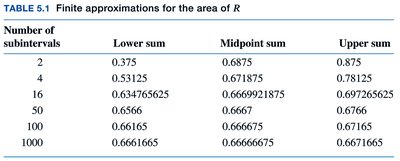
Tabular Comparison: The following table shows how the approximation improves as the number of subintervals increases.
Number of subintervals | Lower sum | Midpoint sum | Upper sum |
|---|---|---|---|
2 | 0.375 | 0.6875 | 0.875 |
4 | 0.53125 | 0.617875 | 0.78125 |
16 | 0.634765625 | 0.6669921875 | 0.697265625 |
50 | 0.6566 | 0.6667 | 0.6766 |
100 | 0.66165 | 0.666675 | 0.67165 |
1000 | 0.6661665 | 0.66666675 | 0.6671665 |
Section 5.2: Sigma Notation and Limits of Finite Sums
Sigma Notation
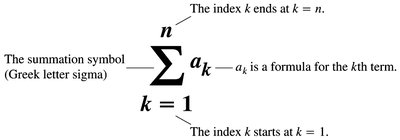
Sigma notation provides a concise way to write sums, especially those with many terms. It is essential for expressing Riemann sums and the process of integration.
Summation Symbol: represents the sum of terms from to .
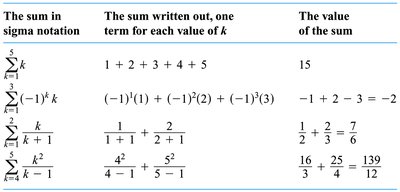
Examples: Common sums include arithmetic and geometric series, as well as sums involving powers of integers.
Algebraic Rules for Sums
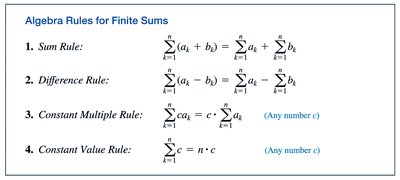
Finite sums obey several algebraic rules, which are useful for manipulating and simplifying expressions before taking limits.
Sum Rule:
Difference Rule:
Constant Multiple Rule:
Constant Value Rule:
Special Sums
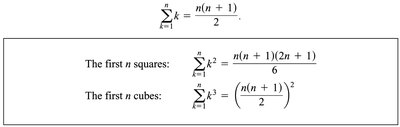
Some sums have closed-form formulas, which are especially useful in evaluating Riemann sums.
Section 5.3: The Definite Integral
Definition and Interpretation
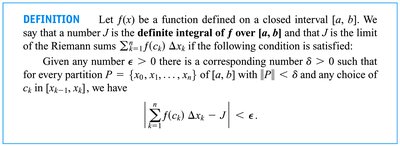
The definite integral is the limit of Riemann sums as the number of subintervals approaches infinity. It represents the signed area under a curve between two points.
Riemann Sum: where is a sample point in the th subinterval and is the width of the subinterval.
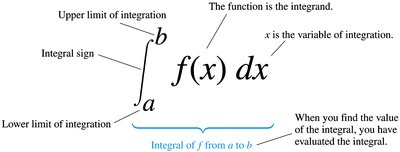
Definite Integral:
Geometric Meaning: The definite integral gives the net area between the graph of and the -axis from to .
Properties and Theorems
The definite integral has several important properties that facilitate its computation and application.
Order of Integration:
Zero Width Interval:
Linearity:
Additivity: for
Integrability: If is continuous on , or has finitely many jump discontinuities, then is integrable on .
Applications and Examples
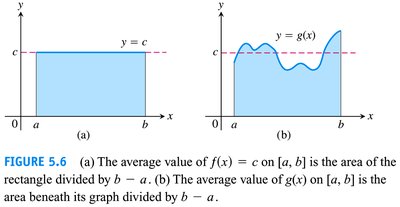
Definite integrals are used to compute areas, average values, and other quantities. For example, the area under from to can be approximated by Riemann sums and exactly computed as .
Example: Approximating the area under using right endpoints and rectangles leads to the sum .
Limit:
Summary Table: Rules Satisfied by Definite Integrals
Rule | Statement |
|---|---|
Order of Integration | |
Zero Width Interval | |
Constant Multiple | |
Sum and Difference | |
Additivity | |
Max-Min Inequality | If on , then |
Domination | If on , then |
Additional info: These notes cover the foundational concepts of area, finite sums, sigma notation, and the definition and properties of the definite integral, which are central to calculus chapters on integration.
