 Back
BackCalculus Study Notes: Limits, Continuity, Differentiation, and Applications
Study Guide - Smart Notes
 Tailored notes based on your materials, expanded with key definitions, examples, and context.
Limits
Understanding Limits
Limits are foundational to calculus, describing the behavior of functions as the input approaches a particular value. They help us understand instantaneous rates of change and the continuity of functions.
Definition: The limit of a function f(x) as x approaches a value a is L, written as , if f(x) gets arbitrarily close to L as x approaches a.
One-Sided Limits: The left-hand limit () and right-hand limit () must be equal and finite for the two-sided limit to exist.
Infinite Limits and Vertical Asymptotes: If f(x) increases or decreases without bound as x approaches a, we write or and say x = a is a vertical asymptote.
Limit Laws
Limit laws allow us to evaluate limits algebraically, provided the individual limits exist:
Sum/Difference Law:
Constant Multiple Law:
Product Law:
Quotient Law: , if
Power Law:
Root Law:
Indeterminate Forms
Expressions like are called indeterminate forms and require algebraic manipulation (factoring, conjugates, etc.) to resolve.
Limits at Infinity
As x approaches infinity, the behavior of polynomials and rational functions depends on the degrees of the numerator and denominator.
Polynomials: The highest degree term dominates as .
Rational Functions: Compare degrees of numerator (m) and denominator (n):
m > n: Limit is
m < n: Limit is 0
m = n: Limit is the ratio of leading coefficients
Continuity
Definition of Continuity
A function f(x) is continuous at x = a if:
f(a) is defined
exists
If any condition fails, f(x) has a discontinuity at x = a.
Types of Discontinuities
Type | Condition |
|---|---|
Removable | exists, but is not defined or not equal to the limit |
Jump | |
Infinite | One or both one-sided limits are |
The Intermediate Value Theorem (IVT)
If f(x) is continuous on [a, b] and z is between f(a) and f(b), then there exists c in [a, b] such that f(c) = z. This theorem guarantees the existence of roots within intervals where the function changes sign.
Differentiation
Average and Instantaneous Rate of Change
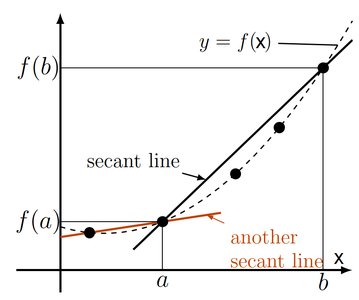
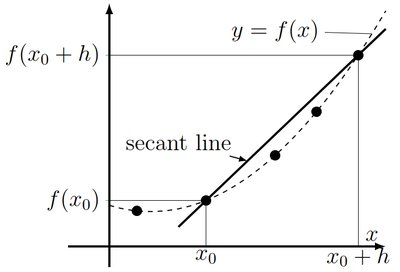
The average rate of change (AROC) of a function f(x) over [a, b] is the slope of the secant line:
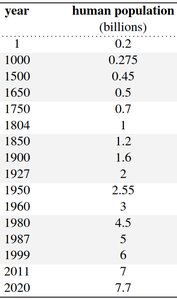
The instantaneous rate of change is the slope of the tangent line at a point, defined as the derivative:
The Derivative as a Function
The derivative function gives the instantaneous rate of change at any x:
Alternative notations: y', dy/dx, df/dx.
Rules of Differentiation
Rule | Formula |
|---|---|
Constant | If , then |
Constant Multiple | If , then |
Sum/Difference | If , then |
Product | If , then |
Quotient | If , then |
Power | If , then |
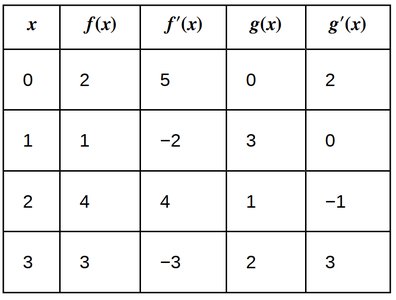
Using Tables for Derivatives
Given values of functions and their derivatives, you can compute derivatives of combinations using the rules above.
Higher Order Derivatives
The second derivative is the derivative of the derivative, representing the rate of change of the rate of change (e.g., acceleration if f(x) is position).
Notation: ,
Applications: Position, Velocity, and Acceleration
Position:
Velocity:
Acceleration:
Related Rates and Implicit Differentiation
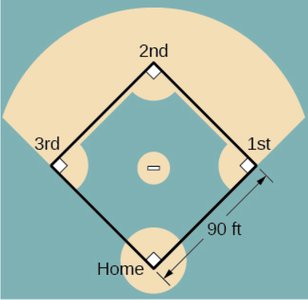
Related Rates
Related rates problems involve finding the rate at which one quantity changes by relating it to other quantities whose rates are known. The chain rule is essential:
Implicit Differentiation
For equations not solved for y, differentiate both sides with respect to x, treating y as a function of x and applying the chain rule when differentiating terms involving y.
Linearization and Differentials
Linear Approximation (Linearization)
The tangent line at x = a provides a linear approximation to f(x) near a:
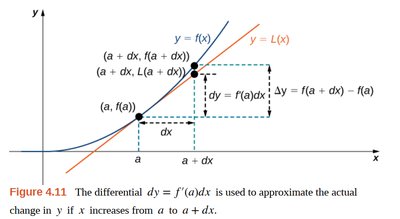
Differentials
The differential dy estimates the change in y for a small change dx in x:
Differential Equations and Growth Models
Exponential Growth and Decay
A differential equation relates a function to its derivatives. The simplest model for population growth is proportional growth:
General solution:
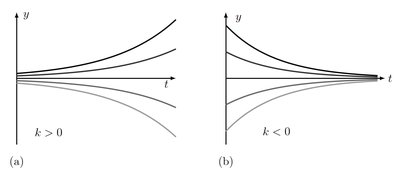
If k > 0, the solution represents exponential growth; if k < 0, exponential decay.
Initial Value Problems (IVP)
To find a specific solution, use an initial condition y(0) = y0:
Solution:
Applications
Population dynamics, radioactive decay, pharmacokinetics, and more can be modeled using differential equations.
Additional info: This guide covers core calculus concepts including limits, continuity, differentiation, related rates, linearization, and introductory differential equations, with applications to life and social sciences. Images included are directly relevant to the explanation of the corresponding paragraphs.
