Back
BackChapter 6: Applications of Definite Integrals – Study Guide
Study Guide - Smart Notes
 Tailored notes based on your materials, expanded with key definitions, examples, and context.
Applications of Definite Integrals
Section 6.1: Volumes Using Cross-Sections
This section introduces methods for finding the volume of solids using definite integrals, particularly by slicing the solid into cross-sections perpendicular to an axis.
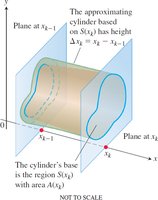
Slicing by Parallel Planes: The solid is divided into thin slabs, each approximated by a cylinder whose base area is A(x) and height is Δx.
Volume Formula: The volume of a solid with integrable cross-sectional area A(x) from x = a to x = b is given by:
Steps for Calculating Volume:
Sketch the solid and a typical cross-section.
Find a formula for A(x), the area of a typical cross-section.
Determine the limits of integration.
Integrate A(x) to find the volume.
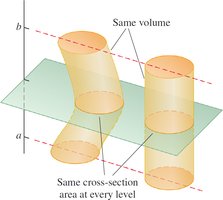
Cavalieri’s Principle: Solids with equal altitudes and identical cross-sectional areas at each height have the same volume.
Section 6.2: Solids of Revolution
Solids of revolution are formed by rotating a region around an axis. The disk and washer methods are used to compute their volumes.
Disk Method
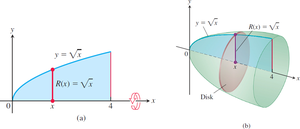
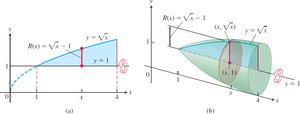
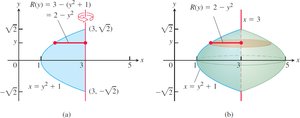
Volume by Disks: When a region is revolved about the x-axis or y-axis, the cross-sections are disks.
Formula for Rotation About the x-Axis:
Formula for Rotation About the y-Axis:
Washer Method
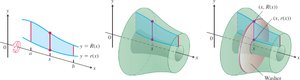
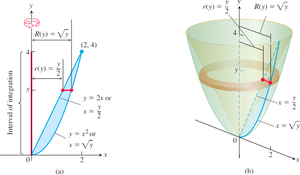
Volume by Washers: Used when the region has a hole, so the cross-sections are washers (rings).
Formula:
Section 6.2: Volumes Using Cylindrical Shells
The shell method is an alternative for finding volumes of solids of revolution, especially when integrating with respect to the other variable is easier.
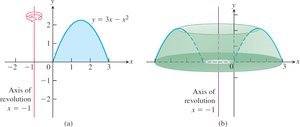
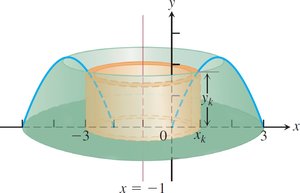
Cylindrical Shells: The region is divided into vertical strips, each forming a cylindrical shell when revolved about an axis.
Shell Volume Formula: For revolution about a vertical line x = L:
Steps for Shell Method:
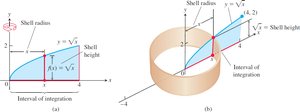
Draw the region and sketch a line segment parallel to the axis of revolution.
Find the limits of integration for the thickness variable.
Integrate the product 2π (shell radius) (shell height) with respect to the thickness variable.
Section 6.3: Arc Length
This section covers how to compute the length of a curve using definite integrals.
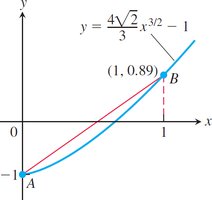
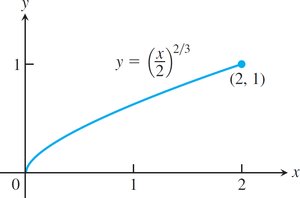
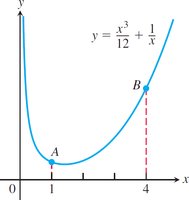
Arc Length Formula for y = f(x): If f' is continuous on [a, b], the arc length is:
Arc Length Formula for x = g(y): If g' is continuous on [c, d]:
Handling Discontinuities: If dy/dx is not defined at some points, rewrite the curve in terms of the other variable.
Section 6.4: Areas of Surfaces of Revolution
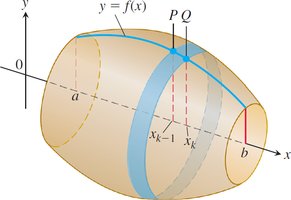
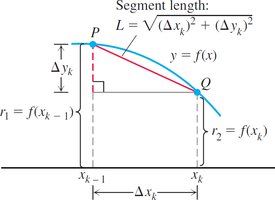
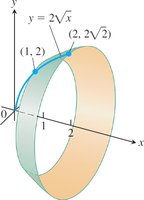
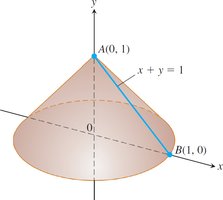
Surface area of a solid generated by revolving a curve about an axis can be found using definite integrals.
Surface Area Formula for y = f(x) about x-axis:
Surface Area Formula for x = g(y) about y-axis:
Section 6.5: Work and Fluid Forces
Definite integrals are used to calculate work done by forces and forces exerted by fluids.
Work Done by a Constant Force:
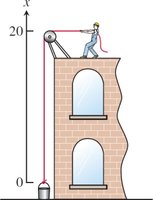
Work Done by a Variable Force:
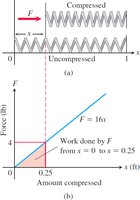
Hooke’s Law for Springs: (force is proportional to displacement)
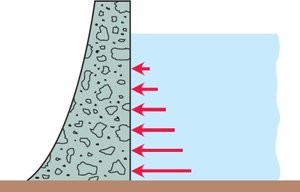
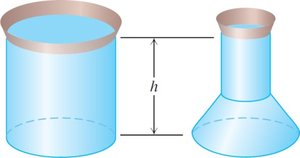
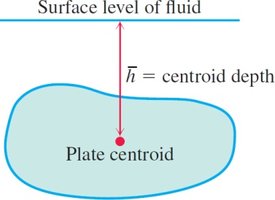
Fluid Pressure: Pressure at depth h is where w is weight-density.
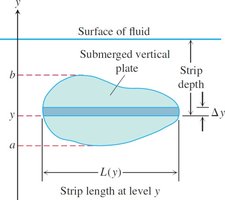
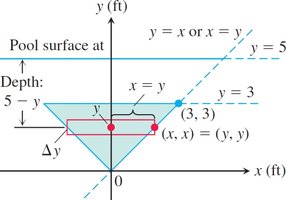
Fluid Force on a Plate:
Section 6.6: Moments and Centers of Mass
This section discusses how to find the center of mass and moments for systems of particles, wires, and plates using integrals.
Moment About the Origin:
Center of Mass:
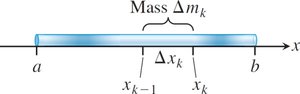
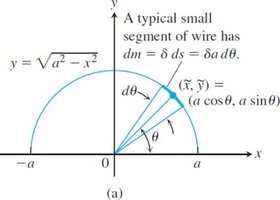
Mass, Moment, and Center of Mass for Thin Wires:
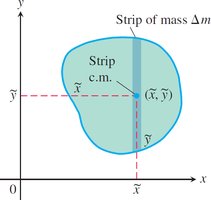
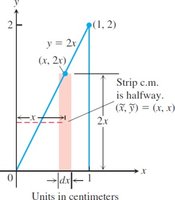
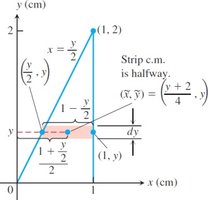
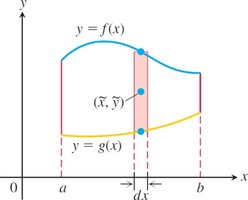
Moments for Plane Regions: Moment about x-axis: Moment about y-axis: Center of mass:
Centroid: For constant density, the center of mass is called the centroid.

The Theorems of Pappus
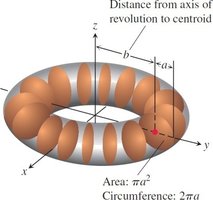
Pappus’s Theorems relate the volume and surface area of solids of revolution to the centroid of the generating region or curve.
Pappus’s Theorem for Volumes: The volume of a solid generated by revolving a plane region about an external axis is the area of the region times the distance traveled by its centroid.
Pappus’s Theorem for Surface Areas: The surface area generated by revolving an arc about an external axis is the arc length times the distance traveled by its centroid.