 Back
Precalculus and Calculus Foundations: Functions, Trigonometry, and Exponential Models
Study Guide - Smart Notes
 Tailored notes based on your materials, expanded with key definitions, examples, and context.
Functions
Definition and Domain of Functions
A function is a rule that assigns to each input exactly one output. The domain of a function is the set of all possible input values (usually x-values) for which the function is defined.
Finding the Domain: For functions involving square roots, the expression inside the root must be greater than or equal to zero.
Critical Points: Set the expression inside the root equal to zero to find endpoints of the domain.
Intervals: Test values in each interval to determine where the function is defined.
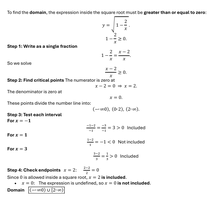
Example: The domain of is .
Recognizing Linear Functions from Tables
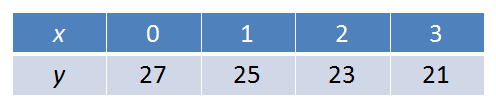
A function is linear if the difference in y-values is constant for equal differences in x-values. This can be checked using tabular data.
If changes by the same amount as increases by a fixed amount, the function is linear.
x | 0 | 1 | 2 | 3 |
|---|---|---|---|---|
y | 27 | 25 | 23 | 21 |
x | 15 | 20 | 25 | 30 |
|---|---|---|---|---|
y | 62 | 72 | 82 | 92 |
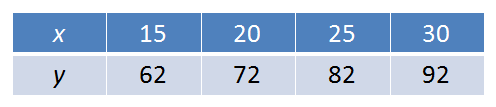
Example: In both tables above, the change in y is constant for each fixed change in x, indicating a linear relationship.
Trigonometric Functions
Right Triangle Definitions
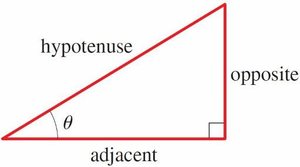
Trigonometric functions relate the angles of a right triangle to the ratios of its sides.
Sine:
Cosine:
Tangent:
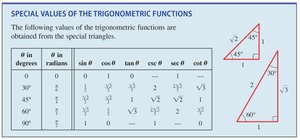
Special Values of Trigonometric Functions
Certain angles have well-known trigonometric values, often derived from special triangles (30-60-90 and 45-45-90 triangles).
θ in degrees | θ in radians | sin θ | cos θ | tan θ | csc θ | sec θ | cot θ |
|---|---|---|---|---|---|---|---|
0° | 0 | 0 | 1 | 0 | undefined | 1 | undefined |
30° | 2 | ||||||
45° | 1 | 1 | |||||
60° | 2 | ||||||
90° | 1 | 0 | undefined | 1 | undefined | 0 |
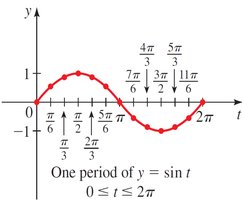
Graphs of Sine and Cosine
The sine function is an odd function, symmetric about the origin. The cosine function is an even function, symmetric about the y-axis. Both are periodic with period .
Sine: repeats every units.
Cosine: repeats every units.
Inverse Trigonometric Functions
Definitions and Properties
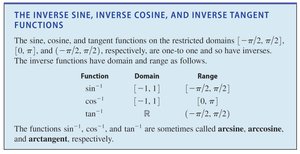
The inverse trigonometric functions undo the action of the trigonometric functions, but are defined only on restricted domains to ensure they are functions (one-to-one).
Function | Domain | Range |
|---|---|---|
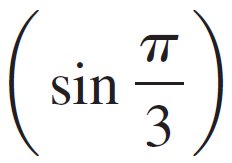
Example:
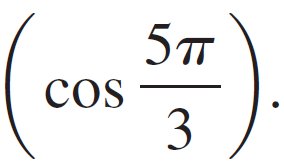
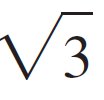
Exponential Functions and Applications
Exponential Growth and Decay
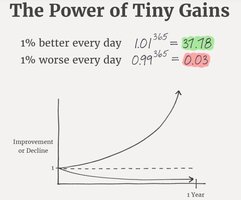
An exponential function has the form or , where the rate of change is proportional to the current value. Exponential growth occurs when or , and decay when or .
Doubling Time: The time required for an exponentially growing quantity to double.
Half-Life: The time required for an exponentially decaying quantity to halve.
Compound Interest
Compound interest is a classic application of exponential growth. The formula for compound interest is:
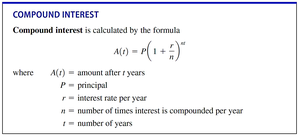
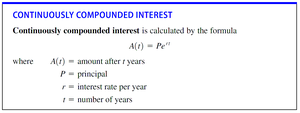
For continuous compounding, the formula is:
Recognizing Function Types from Tables
Given a table of values, you can classify the function as linear, exponential, or neither by examining the pattern of change:
Linear: Constant difference between outputs for equal input steps.
Exponential: Constant ratio between consecutive outputs for equal input steps.
Power: Output changes by a power of the input.
1 | 2 | 3 | 4 | 5 | 6 | |
|---|---|---|---|---|---|---|
F(x) | 1 | 4 | 9 | 16 | 25 | 36 |
G(x) | 2 | 4 | 8 | 16 | 32 | 62 |
H(x) | 1 | 8 | 27 | 64 | 125 | 216 |
K(x) | 6 | 12 | 24 | 48 | 96 | 186 |
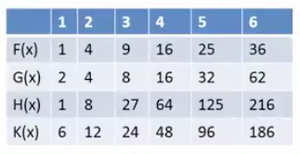
Example: G(x) doubles each time, indicating an exponential function; F(x) increases by perfect squares, indicating a quadratic (power) function.
