 Back
Back1.4 Trigonometric Functions and Their Inverses
Study Guide - Smart Notes
 Tailored notes based on your materials, expanded with key definitions, examples, and context.
Trigonometric Functions and Their Inverses
Basic Geometric Concepts
Trigonometric functions are rooted in geometric concepts such as lines, rays, and angles. Understanding these basics is essential for studying trigonometry and calculus.
Line: Extends infinitely in both directions and is determined by two points.
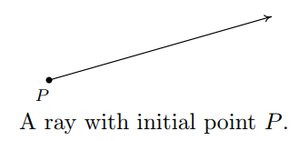
Ray: Part of a line with one endpoint, extending infinitely in one direction.
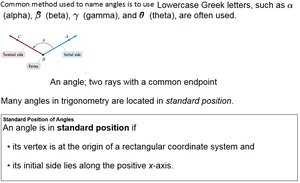
Angle: Formed by two rays sharing a common endpoint called the vertex.
Angles and Their Measurement
Angles can be measured in degrees or radians. Radian measure is fundamental in calculus and trigonometry because it relates directly to the geometry of circles.
Degree: Traditional unit of angle measurement; a full circle is 360°.
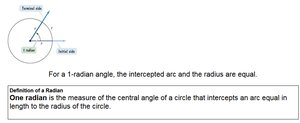
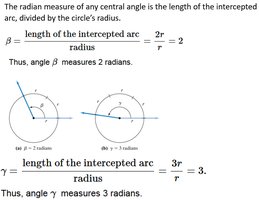
Radian: The angle subtended by an arc equal in length to the radius of the circle. One full revolution is radians.
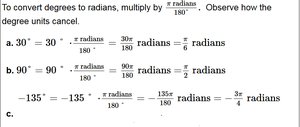
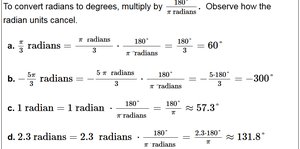
Conversion: To convert degrees to radians, multiply by ; to convert radians to degrees, multiply by .
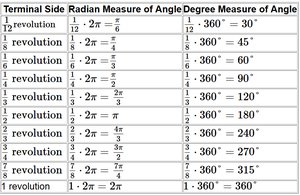
Revolutions, Radians, and Degrees
Understanding the relationship between revolutions, radians, and degrees is crucial for solving trigonometric problems.
Angles in Standard Position
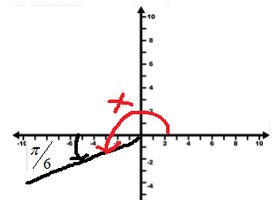
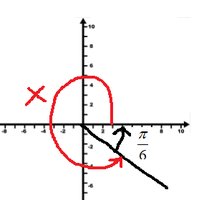
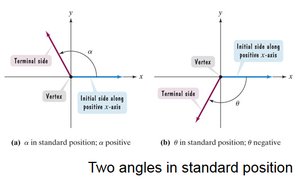
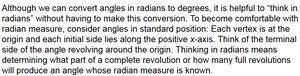
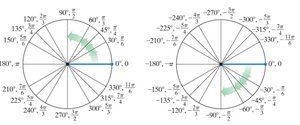
An angle is in standard position if its vertex is at the origin and its initial side lies along the positive x-axis. Positive angles are generated by counterclockwise rotation, negative by clockwise rotation.
Unit Circle and Trigonometric Functions
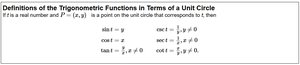
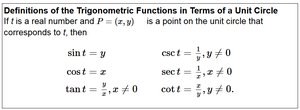
The unit circle (radius 1, centered at the origin) is fundamental for defining trigonometric functions. The coordinates of a point on the unit circle correspond to the values of sine and cosine for a given angle.
sin t: y-coordinate of the point
cos t: x-coordinate of the point
tan t: , provided
csc t: ,
sec t: ,
cot t: ,
Trigonometric Functions in Right Triangles
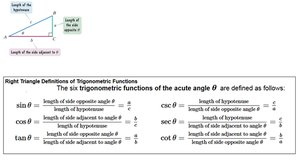
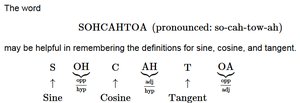
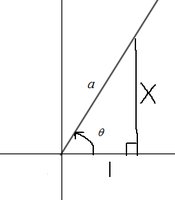
Trigonometric functions can also be defined using right triangles, relating the sides to the acute angle .
sin :
cos :
tan :
csc :
sec :
cot :
Reference Angles and Quadrants
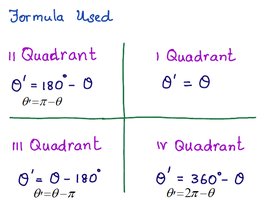
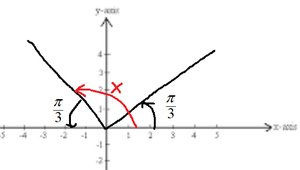
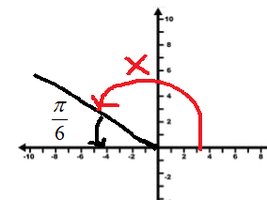
A reference angle is the positive acute angle formed by the terminal side of a given angle and the x-axis. Reference angles are used to determine the values of trigonometric functions in different quadrants.

Trigonometric Identities
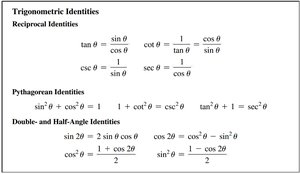
Trigonometric identities are fundamental relationships among the trigonometric functions. They are used to simplify expressions and solve equations.
Reciprocal Identities: , , ,
Pythagorean Identities: , ,
Double- and Half-Angle Identities: , , ,
Periodicity of Trigonometric Functions
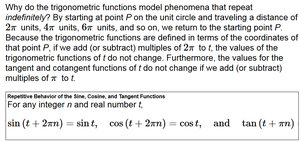
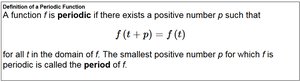
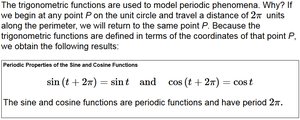
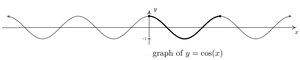
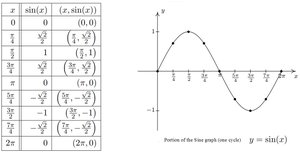
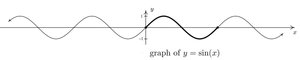
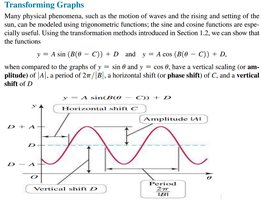
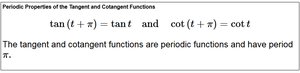
Trigonometric functions are periodic, meaning their values repeat at regular intervals. The period is the smallest positive value for which the function repeats.
Sine and Cosine: Period
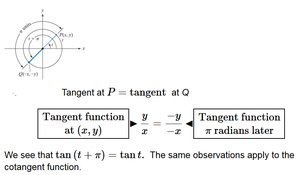
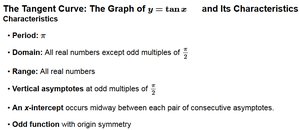
Tangent and Cotangent: Period
Graphs and Properties of Trigonometric Functions
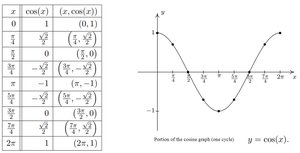
The graphs of trigonometric functions reveal their periodic nature, symmetry, and other important properties.
Sine and Cosine: Continuous, smooth, sine is odd (origin symmetry), cosine is even (y-axis symmetry).
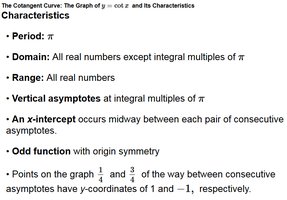
Tangent and Cotangent: Have vertical asymptotes, odd functions, period .
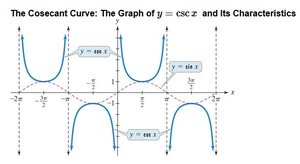
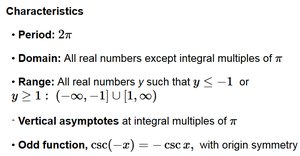
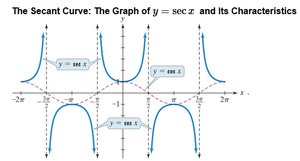
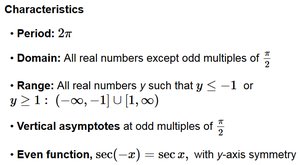
Secant and Cosecant: Have vertical asymptotes, secant is even, cosecant is odd, period .

Inverse Trigonometric Functions
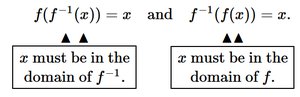
Inverse trigonometric functions allow us to find angles given the value of a trigonometric function. They are essential for solving equations and modeling phenomena.
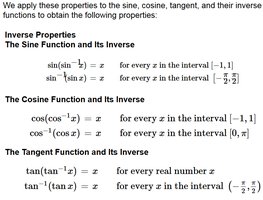
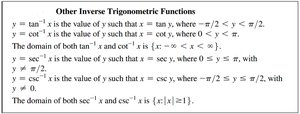
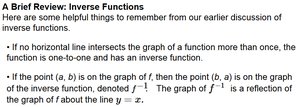
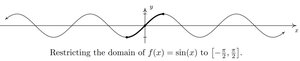
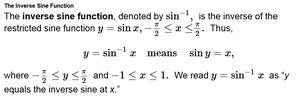
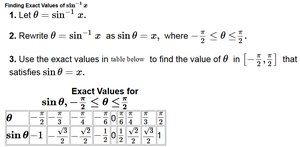
Inverse Sine: means , ,
Inverse Cosine: means , ,
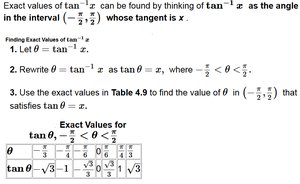
Inverse Tangent: means ,

Applications and Examples
Trigonometric functions and their inverses are used to solve equations, model periodic phenomena, and analyze geometric relationships.
Example: Converting between degrees and radians, finding exact values of trigonometric functions, solving trigonometric equations using reference angles and identities.
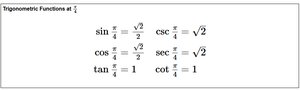
Example: Using the unit circle to determine sine, cosine, and tangent values for special angles.

Summary Table: Trigonometric Functions and Their Properties
Function | Period | Domain | Range | Symmetry | Asymptotes |
|---|---|---|---|---|---|
Sine | All real numbers | [-1, 1] | Odd | None | |
Cosine | All real numbers | [-1, 1] | Even | None | |
Tangent | All real except odd multiples of | All real numbers | Odd | At | |
Cotangent | All real except integral multiples of | All real numbers | Odd | At | |
Secant | All real except odd multiples of | Even | At | ||
Cosecant | All real except integral multiples of | Odd | At |
Additional info:
Some context and explanations were inferred to ensure completeness and clarity for calculus students.
All images included are directly relevant to the adjacent explanations and reinforce the educational content.
