What is the function of the mitochondrial abundance in metabolically active tissues?
Metabolically active tissues have more mitochondria to meet their energy requirements.
What is the function of the mitochondrial abundance in cells with high ATP demand?
Cells with high ATP demand have more mitochondria to produce sufficient energy.
What is the role of porin proteins in the mitochondrial outer membrane?
Porin proteins create channels in the outer membrane that allow certain molecules to enter the mitochondria. These channels are essential for the transport of ions and small molecules needed for ATP production.
Why is the inner mitochondrial membrane impermeable to ions and small molecules?
The inner membrane's impermeability is crucial for maintaining the hydrogen ion gradient required for ATP synthesis. Only specialized proteins can transport ions and small molecules across this membrane.
What is the function of cristae in the mitochondria?
Cristae are folds in the inner membrane that increase its surface area. This allows for more electron transport chain proteins and ATP synthase to be present, enhancing ATP production.
Where in the mitochondria does the citric acid cycle take place?
The citric acid cycle occurs in the mitochondrial matrix. The matrix contains the necessary enzymes, mitochondrial DNA, and ribosomes for this process.
How do mitochondria move within a cell?
Mitochondria can travel along microtubules to different locations within the cell. This movement allows them to respond to the cell's energy needs.
What is the significance of mitochondrial fusion and the formation of tubular networks?
Fusion allows mitochondria to exchange resources and information, forming tubular networks. These networks help optimize ATP synthesis by sharing substances needed for energy production.
Why do mitochondria have circular DNA, and what does it encode?
Mitochondrial DNA is circular because mitochondria are believed to have originated from prokaryotes. This DNA encodes some polypeptides, tRNAs, and rRNAs needed for mitochondrial function.
Why are mitochondria not completely self-sufficient despite having their own DNA and ribosomes?
Mitochondria lack all the genetic information required to produce every protein they need. They rely on the nucleus for additional genetic instructions and import some proteins from the cell.
 Back
Back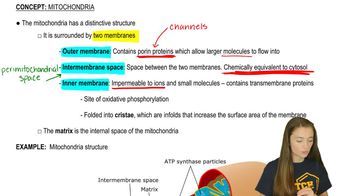
 10:27
10:27