How does acetylation affect chromatin and gene expression?
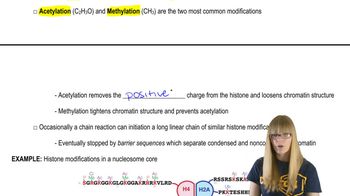
Acetylation removes positive charges from histones, loosening chromatin and making genes more accessible for expression.
What is the effect of methylation on chromatin structure?
Methylation tightens chromatin structure, often repressing gene expression and preventing acetylation.
What is a chain reaction in histone modification?
A chain reaction occurs when one histone modification triggers similar modifications along a stretch of amino acids, affecting large regions of chromatin.
What prevents unlimited spread of histone modifications?
Barrier sequences stop the chain reaction of histone modifications, separating condensed and non-condensed chromatin regions.
What is the epigenetic code?
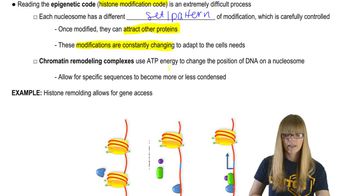
The epigenetic code is the pattern of histone modifications that dynamically regulate gene expression, DNA replication, and cell division.
How do chromatin remodeling complexes influence gene expression?
Chromatin remodeling complexes use ATP to reposition DNA within nucleosomes, allowing or restricting access to specific DNA regions.
What is epigenetic inheritance?
Epigenetic inheritance is the transmission of chromatin states and histone modifications across cell divisions and potentially to offspring.
How does epigenetic inheritance contribute to cellular memory?
Epigenetic inheritance allows cells to retain chromatin states and histone modifications, enabling non-genetic cellular memory.
What is the significance of nucleosome movement in the epigenetic code?
Nucleosome movement, controlled by remodeling complexes, exposes or hides DNA regions, affecting gene expression and replication.
 Back
Back
 03:03
03:03