 Back
BackCell Biology Core Concepts
 05:16
05:16
Terms in this set (21)
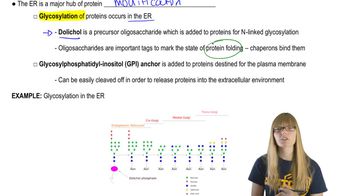
Rough ER is involved in protein synthesis. Smooth ER functions in drug detoxification, carbohydrate metabolism, calcium storage, and steroid biosynthesis.
The Golgi has cis- and trans- sides and is responsible for membrane and protein processing, sorting, and trafficking.
Lysosomes degrade major macromolecules, develop from endosomes, and maintain an acidic environment for digestion.
Anterograde transport moves materials from ER to Golgi to plasma membrane; retrograde transport moves materials backward to earlier compartments.
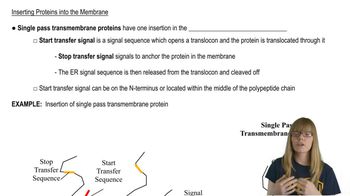
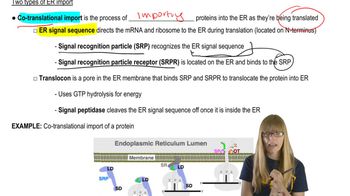
Proteins with signal sequences are recognized by SRP, targeted to the ER translocon, where they fold and process; integral membrane proteins insert via stop-start sequences.
Proteins have retention and retrieval tags such as amino acid sequences, hydrophobic region length, and covalent modifications to direct their localization.
Includes receptor-mediated endocytosis, phagocytosis, and pinocytosis; receptor-mediated involves clathrin, adaptor proteins, and dynamin for vesicle formation.
Clathrin-coated vesicles mediate endocytosis; COPI vesicles mediate retrograde Golgi to ER transport; COPII vesicles mediate anterograde ER to Golgi transport.
Fusion requires v-SNAREs, t-SNAREs, tethering proteins, Rab GTPases, NSF, and SNAPs to mediate vesicle docking and fusion.
Neurons include sensory, motor, and interneurons; glial cells include microglia, oligodendrocytes, Schwann cells, and astrocytes.
Action potential phases: depolarization (Na+ influx), repolarization (K+ efflux), and hyperpolarization (excess K+ efflux).
GPCRs activate heterotrimeric G proteins; Gα subunit switches between GDP (off) and GTP (on); downstream effectors include adenylyl cyclase and phospholipase C.
Gsα activates adenylyl cyclase to increase cAMP and activate PKA; Gqα activates PLC producing IP3 and DAG, increasing cytosolic Ca2+ via ER channels.
RTKs dimerize and autophosphorylate upon ligand binding, recruit adaptor proteins, activate Ras, and trigger MAP kinase cascade leading to gene expression.
Microtubules show polarity, require GTP for assembly, and exhibit dynamic instability with phases of growth (rescue) and shrinkage (catastrophe).
MTOCs include centrosomes and basal bodies; gamma-tubulin nucleates microtubule assembly at these sites.
Actin filaments form stress fibers, gel-like networks, branched and parallel arrays found in trailing edge, cortex, lamellipodia, and filopodia.
Kinesins move cargo toward microtubule plus ends; dyneins move toward minus ends; both use ATP as energy source.
Myosin thick filaments slide along actin thin filaments in sarcomeres; contraction regulated by troponin, tropomyosin, and Ca2+ ions.
Includes adhesive junctions (adherens, desmosomes), tight junctions, gap junctions, and plasmodesmata in plants.
Major ECM proteins are collagens, elastins, proteoglycans, fibronectins, and laminins; basal lamina is a specialized ECM layer.